

1
4


✔ In stock and ready to ship
🚚 Order within calculating... to receive it by
calculating...
✅ Fully tracked delivery on every order
📦 Tracking details sent instantly when your order ships
⭐⭐⭐⭐⭐ 4.8/5 rating from 7,500+ verified customers
🔒 Secure checkout with Visa, Mastercard, Amex, PayPal & Shop Pay
SKU:
MAN-U2905-9124250368
Barcode:
9789124250362
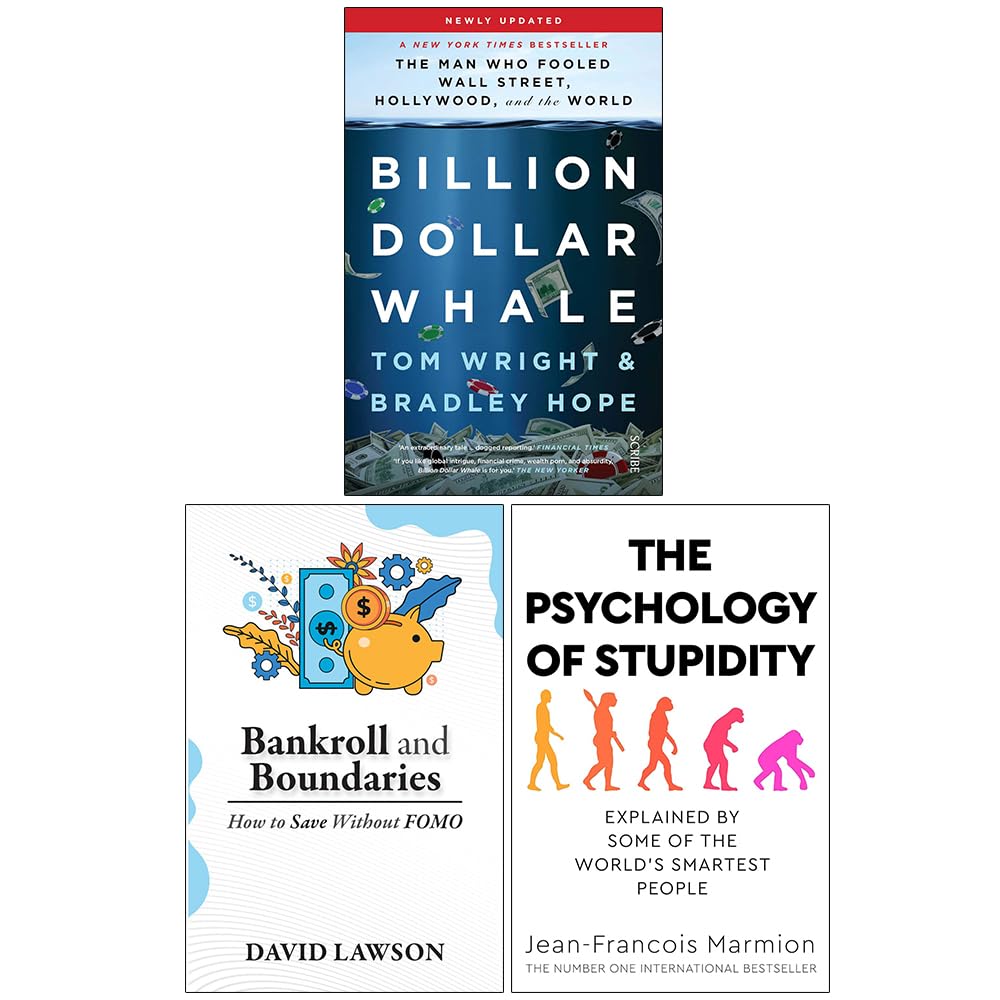
Titles in This Set:
Billion Dollar Whale
Bankroll and Boundaries
The Psychology of Stupidity
Format: Paperback
Overview:
This three-book non-fiction collection brings together a compelling mix of investigative finance, practical money discipline, and cognitive science. Led by Bradley Hope and Tom Wright’s investigative narrative in Billion Dollar Whale, the set then pivots to personal finance insight with Bankroll and Boundaries, before turning to the psychology of decision-making with The Psychology of Stupidity. Designed as a complete, accessible reading experience, this paperback edition offers clear, engaging writing that appeals to curious readers seeking real-world lessons from finance, wealth, and human behavior. Perfect for readers who enjoy books that illuminate complex topics with relatable storytelling, this set serves as a smart, informative gift for personal growth, business-minded readers, and anyone curious about how money and minds intersect in today’s world.
What This Collection Covers:
Across these three titles, readers explore the anatomy of financial intrigue, the art of balancing ambition with everyday practicality, and the ways in which our thinking can misfire in the face of information overload. Billion Dollar Whale investigates a monumental corporate fraud and the system that enabled it, offering a high-stakes narrative about risk, governance, and accountability. Bankroll and Boundaries translates those lessons into grounded personal finance strategies—showing how to save without sacrificing a social life and how to navigate the tension between impulse and prudence. The Psychology of Stupidity synthesizes insights from leading psychologists to explain why intelligent people can be swayed by misinformation, how cognitive shortcuts shape choices, and how to cultivate clearer thinking in a world of rapid media saturation. Together, these titles form a cohesive reading experience about money, decision-making, and human behavior at scale.
Billion Dollar Whale
Bradley Hope and Tom Wright deliver a gripping, expertly reported account of the 1MDB saga and the astonishing heist orchestrated by a young financier. The narrative moves from elite social circles and lavish hospitality to a sprawling web of transactions that crossed continents and tested the limits of global financial oversight. The authors illuminate how appearances—trust, prestige, and access—can obscure systemic risks and enable spectacular misallocation of resources. This is a serious, evidence-driven exposé that remains readable and fast-paced, making it especially valuable for readers curious about financial markets, governance failures, and the human elements behind headlines.
Bankroll and Boundaries
David Lawson’s concise, practical guide blends finance with lifestyle—addressing the real-world tension between saying “yes” to every invitation and building savings for future security. The tone is approachable and wise, offering clear strategies for creating a sustainable balance between enjoying the present and planning for tomorrow. Readers will find actionable steps for budgeting, mindful spending, and setting boundaries that protect financial health without sacrificing social connection. It’s a timely book for anyone feeling the pull of consumer culture while trying to maintain financial discipline, and it doubles as a useful resource for habit formation and personal finance education.
The Psychology of Stupidity
Jean-François Marmion curates insights from top thinkers to explain why smart people sometimes embrace irrational beliefs and make poor decisions. The book examines cognitive biases, information overload, and the social dynamics that shape thinking in the digital age. It blends accessible explanations with practical takeaways for recognizing flawed reasoning, avoiding debunked arguments, and improving critical thinking. Readers will appreciate the witty, thought-provoking approach that makes psychology feel relevant to everyday life—from workplace choices to online discourse. This is a thoughtful addition for anyone interested in psychology, decision-making, and the pressures of modern information ecosystems.
Book-by-Book Guide:
Billion Dollar Whale—Hope and Wright weave a meticulous, page-turning account of financial audacity and oversight failures that enabled one of the era’s most infamous corporate heists. The narrative threads together personal ambition, regulatory gaps, and global finance in a way that informs readers about how large-scale fraud can unfold while keeping the human dimensions front and center. The book stands out for its rigorous reporting, accessible prose, and its capacity to illuminate complex financial mechanisms without losing narrative drive. It’s essential reading for anyone curious about investment ecosystems, governance, and accountability in the modern world. Bankroll and Boundaries—Lawson’s practical guide translates broad financial theory into achievable habits. It emphasizes the necessity of financial boundaries to protect long-term goals while still enjoying meaningful social and cultural experiences. The tone is encouraging and pragmatic, offering concrete steps for budgeting, setting priorities, and avoiding debt traps. Aimed at readers who want sustainable money habits, it’s a helpful companion for navigating the tensions between lifestyle and thrift. The Psychology of Stupidity—Marmion assembles perspectives from renowned psychologists to demystify why intelligent individuals can be swayed by flawed reasoning and misinformation. The discussion covers cognitive biases, media saturation, and social dynamics that influence belief and behavior. It provides readers with practical insights to sharpen discernment, evaluate evidence, and communicate more effectively in a world overloaded with information. Each chapter invites reflection and practical takeaways for clearer thinking and smarter choices.
Who This Set Is Perfect For:
This trio is ideal for curious non-fiction readers who love exploring real-world stories, practical money advice, and psychology. It suits adults and mature young adults seeking a balanced, thought-provoking reading list that blends investigative journalism, personal finance guidance, and cognitive science. Gift buyers will find it a compelling “gift set” for graduates stepping into finance or professionals aiming to strengthen financial literacy and critical thinking. Readers interested in current events, corporate governance, or mindset optimization will appreciate the diverse perspectives across these titles, while book clubs can enjoy lively discussions about ethics, responsibility, and decision-making in contemporary society.
Key Benefits:
- Encourages critical thinking about money, power, and governance
- Delivers practical budgeting and boundaries for everyday life
- Offers engaging, well-researched storytelling for broad appeal
- Provides real-world context for financial literacy and risk awareness
- Supports informed discussions about media, misinformation, and influence
- Convenient paperback format that’s easy to handle and gift
About the Author:
Bradley Hope and Tom Wright are investigative journalists whose collaboration on Billion Dollar Whale brought a global spotlight to the 1MDB saga, blending rigorous reporting with accessible storytelling. David Lawson is known for his practical approach to personal finance and habit-building in Bankroll and Boundaries, offering a clear framework for saving without sidelining social life. Jean-François Marmion is a respected psychologist and editor whose The Psychology of Stupidity gathers insights from leading thinkers to illuminate how rational minds can be led astray in the age of information abundance. Each author brings credibility, clarity, and a distinctive voice to their respective titles, contributing to a compelling, trust-worthy set of non-fiction reads.
Why You’ll Love This Set:
You’ll appreciate the coherence of ideas across money, decision-making, and accountability—and the way each book builds practical understanding without sacrificing storytelling. Owning the complete collection means seamless access to three complementary perspectives in one affordable paperback edition, making it an excellent choice for personal growth, reference, or gifting. If you’re seeking a thoughtful, informative reading experience that translates complex topics into actionable takeaways, this set delivers warmth, authority, and lasting value for any reader curious about how the world really works.
Please Note: The individual books included in this listing will be dispatched as per the original UK ISBN and UK edition cover image shown in the image.
- Choosing a selection results in a full page refresh.