

1
4


✔ In stock and ready to ship
🚚 Order within calculating... to receive it by
calculating...
✅ Fully tracked delivery on every order
📦 Tracking details sent instantly when your order ships
- Free US shipping on orders over $99 · $3.99 under $99
- Dispatched in 1–2 business days · delivery in 3–7 business days from dispatch via USPS (US only)
- 14-day returns from the date of delivery
⭐⭐⭐⭐⭐ 4.8/5 rating from 7,500+ verified customers
🔒 Secure checkout with Visa, Mastercard, Amex, PayPal & Shop Pay
SKU:
MAN-VRT-RVS+2-U250780-9789124341619
Barcode:
9789124341619
Titles in This Set:
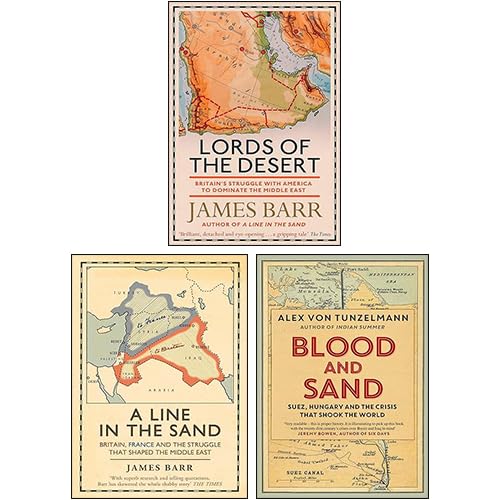
Blood and Sand
Lords of the Desert
A Line in the Sand
Format: Paperback
ISBN: 9781847394606/9781471139802/9781847394576
Overview:
This three-book collection by James Barr brings together a deft, tightly argued panorama of the Middle East across the first half of the twentieth century and into the mid-century power shifts. Blood and Sand reframes the Suez Crisis of 1956 and the nearby Hungarian upheaval within the broader currents of Arab–Israeli tensions and the enduring pull of imperial interests and oil politics. Lords of the Desert traces Britain’s evolving motives in the Middle East after World War II, revealing how strategic prestige, access to resources, and the redrawing of imperial maps shaped a region at the center of global power. A Line in the Sand revisits the 1916 Sykes–Picot agreement, exposing how two leaders’ bets carved a map that still governs borders, mandates, and diplomatic fault lines today. Together, the set offers rigorous, accessible non-fiction that deepens understanding of how empires, energy, and diplomacy collided to shape the modern Middle East.
What This Collection Covers:
Across Blood and Sand, Lords of the Desert, and A Line in the Sand, Barr builds a cohesive narrative about how external powers sought dominance in a crossroads region. The books illuminate how the Suez Crisis intersected with Cold War anxieties, how postwar Britain recalibrated its imperial role, and how the infamous Sykes–Picot line continues to influence contemporary state boundaries. The collection emphasizes the interdependence of military action, diplomatic maneuvering, and resource politics—oil, routes, and access—that determined who held leverage and who paid the price. Readers will come away with a nuanced view of why the Middle East mattered to global powers, how maps were drawn and redrawn, and how those decisions reverberate through current affairs. The tone is scholarly yet lucid, inviting both history enthusiasts and students seeking a solid, well-sourced historical framework for this pivotal era.
Book-by-Book Guide:
Blood and Sand, Barr’s investigation into two cataclysmic events—the Suez Crisis and the Hungarian uprising—places them within the wider arc of Arab–Israeli tensions and the imperial calculus of oil and influence. The narrative blends archival evidence with a keen eye for geopolitical context, offering readers a fresh lens on how brinkmanship and diplomacy played out under the shadow of nuclear anxieties. The book argues that those sixteen days in late October and November 1956 were not isolated incidents but part of a broader struggle over control, identity, and regional security. Barr’s analysis helps readers grasp how oil politics and international power plays contributed to shaping a volatile moment in modern history, making this a foundational work for understanding mid‑century geopolitics in the region.
Lords of the Desert, a penetrating look at Britain’s enduring influence in the Middle East after victory in 1945, examines why the empire clung to strategic access, prestige, and, increasingly, oil. Barr traces the shift from overt imperial security concerns to a more complex calculus that weighed regional stability, energy supplies, and international prestige. The book reveals how the end of formal empire did not end Britain’s role, but transformed its objectives and tactics, leaving a lasting imprint on the political map of the region. Through meticulous research and compelling narrative, Barr demonstrates how imperial legacies, economic interests, and national aspirations collided as Middle Eastern states asserted their own sovereignty in a rapidly changing world.
A Line in the Sand, which revisits the infamous 1916 partition plan, shows how two key figures—Sir Mark Sykes and François Georges-Picot—drew a boundary that would shape Palestine, Transjordan, and Iraq under British and French mandates. Barr unpacks the actors, ambitions, and consequences behind the line drawn in the desert, explaining how those early decisions set the stage for a century of diplomacy and conflict. The book connects wartime diplomacy to postwar governance, illustrating how the ambitions of rival powers can produce durable political fault lines. Readers gain insight into the interplay between strategic objectives, local realities, and the enduring question of self-determination in a volatile region.
Who This Set Is Perfect For:
This collection is ideal for readers who crave a thorough, accessible entry into mid‑century Middle Eastern history and international diplomacy. Historians, politics students, and engaged general readers will appreciate the clear narrative threads linking warfare, diplomacy, and resource politics. Gift buyers seeking substantial, non-fiction reading that informs current affairs through historical context will find in this trio a compelling, cohesive set. It’s well suited for book clubs exploring global history, classrooms examining imperial legacies, and collectors who value well-sourced, thoughtfully presented histories. Whether you’re new to the topic or revisiting the period with a fresh lens, these volumes offer a rigorous, engrossing examination of how the region’s past continues to shape its present.
Key Benefits:
- Comprehensive three‑book collection that covers a pivotal era in Middle Eastern history
- Clear, accessible prose that balances rigorous research with readable storytelling
- Deepens understanding of imperial politics, energy dynamics, and diplomacy
- Great for coursework, reading groups, and thoughtful gift sets
- Portable paperback format for easy study, travel, and reference
- Structured narrative arcs that illuminate cause, consequence, and context
- Promotes critical thinking about how past borders influence current events
About the Author:
James Barr is a historian whose work focuses on Middle East geopolitics and the complex interplay between empire, diplomacy, and regional power. Through thorough archival research and accessible prose, Barr translates intricate diplomatic histories into compelling narratives that illuminate how global forces intersect with local realities. His three-book collection demonstrates a consistent commitment to rigor, clarity, and a holistic view of how moments such as the Suez Crisis, postwar imperial recalibration, and the Sykes–Picot legacy shaped today’s geopolitical landscape.
Why You’ll Love This Set:
If you’re seeking a definitive, well‑structured examination of critical turning points in Middle Eastern history, this set delivers. The three titles work together to provide a complete arc—from the long shadow of the Sykes–Picot map to the mid‑century realignments that defined regional power. The combination of accessible writing, solid sourcing, and thematic cohesion makes it invaluable for study or thoughtful reading. It’s a meaningful addition to any non-fiction shelf and a thoughtful gift for history buffs who value depth without sacrificing readability.
Please Note: The individual books included in this listing will be dispatched as per the original UK ISBN and UK edition cover image shown in the image.
- Choosing a selection results in a full page refresh.