

1
8


✔ In stock and ready to ship
🚚 Order within calculating... to receive it by
calculating...
✅ Fully tracked delivery on every order
📦 Tracking details sent instantly when your order ships
⭐⭐⭐⭐⭐ 4.8/5 rating from 7,500+ verified customers
🔒 Secure checkout with Visa, Mastercard, Amex, PayPal & Shop Pay
SKU:
MAN-PR-RT-U410150-9781804452271
Barcode:
9781804452271
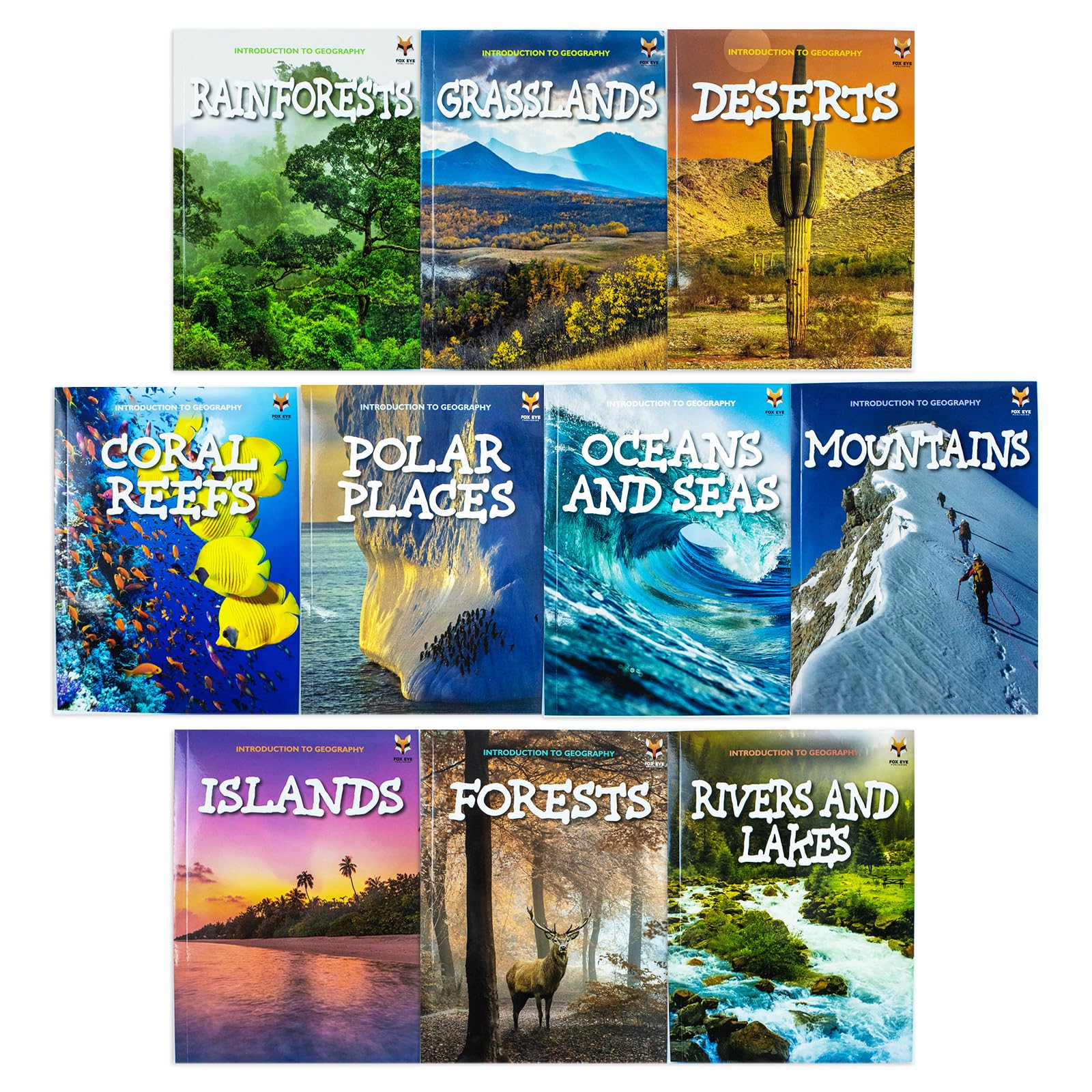
Titles in This Set:
Coral Reefs
Deserts
Forests
Grasslands
Islands
Mountains
Oceans and Seas
Polar Places
Rainforests
Rivers and Lakes
Format: Paperback
Overview:
Introduce young readers to the world with this accessible 10-book collection, Children’s Introduction to Geography for Beginners. Each title invites curiosity through concise explanations, vivid imagery, and bite-sized facts that connect places to people, wildlife, and everyday life. From teeming coral reefs to expansive deserts, rolling grasslands to icy polar places, the collection builds foundational map-reading skills and geographic curiosity without overwhelming early readers. Jasmine Brooke guides youngsters through diverse environments with a friendly, age-appropriate voice, making geography feel relevant and exciting. The paperback format keeps these volumes light and easy to handle for little hands, whether at home, in classrooms, or on family travel. This set is ideal for parents seeking a cohesive, kid-friendly geography starting point and for educators looking to spark inquiry with a dependable, teachable sequence.
What This Collection Covers:
This collection takes readers on a global tour, introducing habitats, landforms, and the natural forces that shape them. Each volume highlights distinctive features—reef ecosystems, arid landscapes, forest strata, grassland dynamics, island isolation, mountain climates, oceanic currents, polar conditions, rainforest biodiversity, and freshwater systems. The titles reinforce how geography connects to daily life: how climate influences what animals survive, how water shapes settlements, and how humans interact with their surroundings. By organizing topics in a logical progression, the set helps children build a mental map of the world, develop spatial awareness, and grow confidence in asking questions about where places are and why they look the way they do.
Book-by-Book Guide:
Coral Reefs—This introductory guide dives into underwater habitats where coral polyps and algae create bustling communities. Young readers learn where reefs are found, how sunlight and warm temperatures foster growth, and why reefs are vital for biodiversity and coastal protection. The language stays approachable, with simple explanations of reef food webs and the ways people can help protect these delicate ecosystems. Colorful imagery and a clear layout invite independent reading while encouraging conversations about ocean geography and environmental stewardship.
Deserts—Deserts come to life as landscapes of heat, sand, and surprising life. The book explains why deserts form, how organisms cope with scarce water, and how weather patterns shape dunes, rock formations, and plant life. Short, engaging text pairs with vivid photos to show students that deserts are diverse places, not empty wastelands. Readers discover human adaptations—from nomadic routes to oasis towns—while learning to interpret maps that reveal how climate defines geography.
Forests—Forests unfold in layers—from canopy to forest floor—demonstrating why trees matter to weather, wildlife, and people. The book highlights temperate, tropical, and boreal forests, touching on biodiversity and the interdependence of species. Accessible explanations describe how forests influence air, rainfall, and daily life. With friendly visuals, readers see how geography shapes ecosystems and why conserving forests supports a healthy planet.
Grasslands—Grasslands present vast open spaces where grasses dominate and diverse animals graze. The title explains climate, fire regimes, and the balance between plants and herbivores. Readers explore plains and savannas around the world, learning how seasons and rainfall govern life on the land. The approachable text helps children grasp the importance of grassland habitats for food webs, and how people use these spaces for agriculture and culture.
Islands—Islands charm with isolation and unique biology. This volume explains how size and distance from continents shape ecosystems, why island species often evolve differently, and how humans connect with island geography. Colorful spreads illuminate volcanic origins, coral atolls, and coastal communities. The text invites curiosity about how geography affects language, culture, and resource use, encouraging readers to imagine life on a small landmass surrounded by vast seas.
Mountains—Mountains introduce elevation, climate change with altitude, and the spectacular scenery that draws explorers. Readers learn how mountains influence weather patterns, water sources, and habitats from valleys to high-altitude zones. The narrative emphasizes human journeys—routes, villages, and sporting traditions—while highlighting the delicate balance between mountains’ beauty and vulnerability to environmental pressures.
Oceans and Seas—This volume surveys the world’s vast blue realms, explaining the difference between oceans and seas and the power of currents, tides, and waves. Children discover marine life, navigation, and how humans rely on oceans for food, transport, and climate regulation. Simple diagrams and photographs help readers understand how geography connects continents, ecosystems, and the people who depend on marine environments.
Polar Places—Polar Places contrasts icy landscapes with life adapted to extreme cold. The book explains ice formation, seasonal darkness, and the animals that endure polar winters. Readers gain an understanding of exploration history, research stations, and the ways climate affects ice cover. Clear explanations emphasize the fragility of polar ecosystems and the global importance of preserving these unique regions.
Rainforests—Rainforests showcase astonishing biodiversity and the layered structure of tropical forests. The text highlights how heavy rainfall, warm temperatures, and diverse plants support countless species. Readers explore canopy, understory, and forest floor, learning how Indigenous knowledge and conservation efforts help protect these fragile environments while connecting geography to cultural heritage.
Rivers and Lakes—Rivers and Lakes introduces freshwater systems as lifelines for people and wildlife. The book explains how rivers carve landscapes, feed deltas, and support communities, while lakes provide reserves for plants and animals. Readers discover the water cycle’s role in geography, the ways habitats depend on clean water, and how human activity can impact these essential freshwater resources.
Who This Set Is Perfect For:
This collection is ideal for curious early readers and elementary students beginning a geography journey. It suits homeschooling families, classroom libraries, and gift purchasers looking for a cohesive, educational set. The approachable language and vivid visuals support independent reading, guided reading, or shared reading experiences. It’s also a practical companion for parents helping with map skills, science projects, or geography-themed activities, fostering a lifelong interest in our planet and its diverse regions.
Key Benefits:
- Engaging, age-appropriate introductions to major world habitats and landforms
- Progressive geography concepts that build strong foundational map skills
- Bright visuals and concise text designed for reluctant readers
- Perfect gift set for budding geographers and gift-giving occasions
- Lightweight paperback edition ideal for travel, libraries, and classrooms
- Clear, consistent structure across all titles to support curriculum use
About the Author:
Jasmine Brooke brings a folksy, reader-friendly tone to children’s geography, translating complex ideas into approachable, bite-sized lessons. Her work emphasizes curiosity, observation, and the connections between places and people. With a focus on practical learning, Brooke’s narratives invite young readers to explore the world with questions, maps, and firsthand wonder. This collection showcases her gift for making science and geography feel doable for beginning readers while inspiring confidence to explore further.
Why You’ll Love This Set:
This 10-book collection offers a cohesive, immersive introduction to geography that’s easy to digest and delightful to read. Owning the full set provides a comprehensive reference for curious minds, a reliable classroom resource, and a ready-made reading curriculum that encourages review and discussion. The combination of approachable language, vivid imagery, and consistent formatting makes it a standout gift set for families and educators seeking a solid foundation in world geography.
Please Note: The individual books included in this listing will be dispatched as per the original UK ISBN and UK edition cover image shown in the image.
- Choosing a selection results in a full page refresh.