

1
4


✔ In stock and ready to ship
🚚 Order within calculating... to receive it by
calculating...
✅ Fully tracked delivery on every order
📦 Tracking details sent instantly when your order ships
- Free US shipping on orders over $99 · $3.99 under $99
- Dispatched in 1–2 business days · delivery in 3–7 business days from dispatch via USPS (US only)
- 14-day returns from the date of delivery
⭐⭐⭐⭐⭐ 4.8/5 rating from 7,500+ verified customers
🔒 Secure checkout with Visa, Mastercard, Amex, PayPal & Shop Pay
SKU:
MAN-VRT-U290750-9789124306984
Barcode:
9789124306984
Titles in This Set:
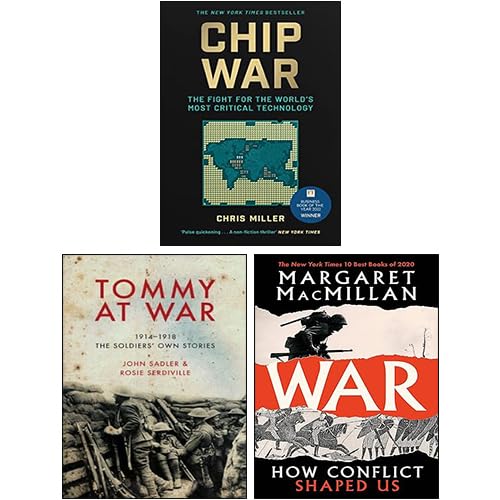
Chip War How Conflict Shaped Us
Tommy At War 1914-1918
War: How Conflict Shaped Us
Format: Paperback
Overview:
Three thought-provoking non-fiction titles come together in this paperback collection to illuminate how conflict reshapes technology, societies, and everyday life. Chip War: How Conflict Shaped Us traces the pivotal role of microchips—the scarce resource powering modern power and prosperity—and explains how control of this technology determines military advantage, economic influence, and geopolitical leverage. Tommy At War 1914-1918 offers a human-centered account of the Great War, presenting frontline scenes and behind-the-scenes perspectives that reveal the emotional and social dimensions of total war. War: How Conflict Shaped Us, by a renowned historian, broadens the lens to connect global warfare with long-term social change, asking how societies adapt, endure, or transform in the wake of conflict. Together, these works form a cohesive exploration of conflict’s multifaceted impact, engaging readers with accessible prose, rigorous research, and timely insights into the forces that shape our world. This set is ideal for curious readers, students, and history enthusiasts seeking a well-rounded, one-stop look at conflict across technology, battle, and society.
What This Collection Covers:
From the silicon frontier to the mud-splashed trenches to broad social upheaval, this collection covers a broad spectrum of conflict and its consequences. Chip War anchors the volume in the present day, explaining how semiconductors have become the engine of power, innovation, and national security, and how policy decisions ripple through economies and everyday devices. Tommy At War 1914-1918 takes readers into the heart of the First World War, pairing battlefield accounts with civilian voices to show how war reconfigures families, communities, and national identities. War: How Conflict Shaped Us situates these conversations in a longer historical arc, inviting readers to consider patterns of resistance, reform, and resilience that recur after wars begin and end. The collection invites reflection on technology, memory, and the human costs of conflict, while offering clear, engaging narratives that work well for personal study, book clubs, and classroom discussion. It’s a robust starter set for anyone exploring how war and conflict shape the modern world.
Book-by-Book Guide:
Chip War How Conflict Shaped Us tells the story of a century’s quiet revolution—the rise of microchips as the decisive resource in geopolitics and everyday life. It blends science, economics, and policy to show how tiny silicon components can determine who leads in defense, finance, and global communication. With accessible case studies and expert perspectives, this book illuminates the modern tech landscape as a field of strategic competition, while also tracing the human implications of reliance on advanced electronics. Readers will come away with a richer understanding of how technology intersects with power, policy, and daily life, and why chips matter far beyond a single device. This volume invites curiosity about the hidden infrastructure behind missiles, smartphones, and markets, making complex ideas approachable for a broad audience.
Tommy At War 1914-1918 presents a vivid portrait of a world at war, balancing soldiers’ experiences on the frontline with the broader social upheavals that accompanied global conflict. Historians John Sadler and Rosie Serdiville bring together personal accounts, strategic context, and public life to reveal how people from all backgrounds endured, supported, and contributed to the war effort. The book captures both valiant moments and quiet sacrifices, illustrating how the war reshaped borders, identities, and daily routines. It invites readers to connect micro-level experiences with macro-level consequences, fostering empathy and historical literacy while offering a clear, compelling narrative of one of history’s defining chapters.
War: How Conflict Shaped Us by Margaret MacMillan surveys the long arc of warfare’s influence on societies worldwide. The book traces the intimate ties between conflict and culture—from political institutions and education to art, memory, and civic life. MacMillan encourages readers to consider how wars alter the way communities organize themselves, govern, and imagine their future. The writing blends narrative clarity with rigorous analysis, helping readers see the patterns that recur across eras while appreciating the unique circumstances of each conflict. This book completes a three-title journey through war’s societal footprints and invites thoughtful discussion about how we learn from past struggles to navigate present and future challenges.
Who This Set Is Perfect For:
This collection is ideal for adult readers and mature young readers with a serious interest in history, geopolitics, technology, and the human dimensions of war. It’s a thoughtful gift for students, teachers, and book clubs exploring non-fiction, world history, and the impact of conflict on everyday life. Readers who enjoyed accessible yet substantial histories will appreciate the clear explanations, real-world relevance, and cross-disciplinary approach. Whether you’re building a history syllabus, curating a thoughtful gift, or simply satisfying curiosity about how conflict shapes our world, this set offers breadth, depth, and compelling storytelling across three related angles on war and power.
Key Benefits:
- Three-strong non-fiction collection covering technology, military history, and social analysis
- Accessible narrative voice balanced with rigorous, credible research
- Great for gift-giving to history buffs, students, and curious readers
- Suitable for book clubs and classroom discussion on conflict and society
- Broad appeal across interests in geopolitics, technology, and human stories
- Compact paperback format for convenient reading and gifting
About the Author:
This set brings together multiple respected voices. Chip War is a multi-author collection that examines the global implications of semiconductor technology as a strategic resource. Tommy At War 1914-1918 is written by historians John Sadler and Rosie Serdiville, who provide front-line perspectives and social context to the WWI experience. War: How Conflict Shaped Us is authored by Margaret MacMillan, a distinguished historian whose work focuses on the long arc of war and its influence on societies. Together, these voices offer a balanced blend of technical insight, human storytelling, and broad historical analysis, making complex topics approachable while maintaining scholarly integrity. Readers benefit from diverse viewpoints and a well-rounded understanding of how conflict shapes our world across time and disciplines.
Why You’ll Love This Set:
If you’re seeking a compact, thought-provoking introduction to how conflict alters technology, society, and everyday life, this collection delivers. The three titles complement each other, providing a 360-degree view of war’s implications—from the unseen infrastructure behind devices to the lived experiences of those who endured war and the broader societal shifts that follow. It’s an excellent addition to any non-fiction shelf, a meaningful gift for knowledge seekers, and a reliable resource for study and discussion. The set offers both immediate appeal and lasting value for readers who enjoy delving into historical patterns with clarity and nuance.
Please Note: The individual books included in this listing will be dispatched as per the original UK ISBN and UK edition cover image shown in the image.
- Choosing a selection results in a full page refresh.