

1
9


✔ In stock and ready to ship
🚚 Order within calculating... to receive it by
calculating...
✅ Fully tracked delivery on every order
📦 Tracking details sent instantly when your order ships
⭐⭐⭐⭐⭐ 4.8/5 rating from 7,500+ verified customers
🔒 Secure checkout with Visa, Mastercard, Amex, PayPal & Shop Pay
SKU:
MAN-PR-FOX-U020160-9781804455999
Barcode:
9781804455999
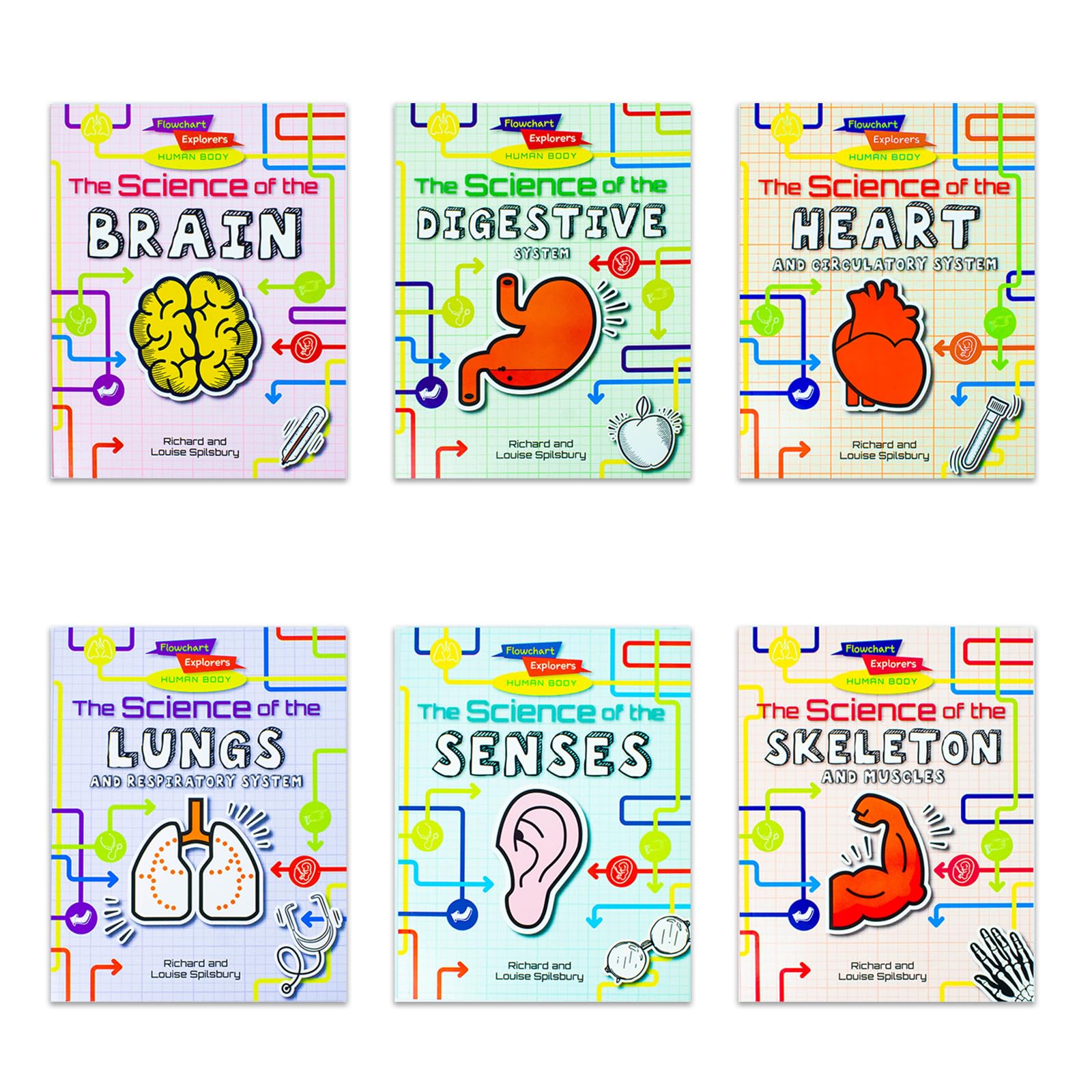
Titles in This Set:
The Science of the Brain
The Science of the Digestive System
The Science of the Heart and Circulatory System
The Science of the Lungs and Respiratory System
The Science of the Senses
The Science of the Skeleton and Muscles
Format: Paperback
Overview:
This six-book collection from Flowchart Explorers invites young readers to explore the human body with engaging visuals and clear explanations. Each title takes a focused slice of biology—brain function, digestion, the heart and circulatory system, lungs and breathing, the senses, and the skeleton and muscles—presented through bright artwork, simple diagrams, and approachable text. Designed for curious minds in the primary-years range, these volumes blend science facts with accessible language, making complex ideas feel tangible. Readers gain a solid foundation in how their bodies work, while also building scientific vocabulary and critical-thinking skills through diagrams, captions, and mini-activities. The set is ideal for home study, classroom reading corners, or science-themed gift-giving for budding scientists who enjoy visually driven content. Collectors and parents will appreciate the cohesive design that ties each topic together while letting readers explore at their own pace. Richard and Louise Spilsbury deliver dependable, age-appropriate explanations that empower kids to wonder, question, and discover.
What This Collection Covers:
Across these six titles, readers embark on a guided tour of the human body. The Brain explores nerve pathways and thinking processes; the Digestive System maps how food becomes fuel; the Heart and Circulatory System reveals how blood moves through the body; the Lungs and Respiratory System explains air exchange and breath control; the Senses introduces sight, hearing, taste, smell, and touch; and the Skeleton and Muscles uncovers bones, joints, and how our muscles power movement. The progression is intentionally cohesive: each book builds on the prior volume, layering new terms and concepts while reinforcing core science literacy. Visually oriented learners benefit from flowchart-like diagrams and bold illustrations that illuminate connections between organs and systems. This collection supports early scientific inquiry, classroom discussion, and a growing confidence in reading non-fiction. It’s a reliable foundation for projects, quizzes, and long-term curiosity about how humans stay alive, active, and aware in a complex world.
Book-by-Book Guide:
The Science of the Brain — This volume offers an approachable map of the brain’s structure and its role in thought, memory, and sensation. Readers encounter kid-friendly explanations of neurons, brain regions, and how signals travel through the nervous system. The design emphasizes daily relevance—how the brain helps us learn, solve problems, and respond to our environment—paired with diagrams that simplify abstract ideas into tangible visuals. Short bite-size sections, glossary terms, and quick recap questions help reinforce learning and spark curiosity about mind and memory. It’s an excellent entry point for readers beginning to connect biology with everyday behavior and learning experiences. The Science of the Digestive System — A clear journey from mouth to intestines, this book explains how our bodies break down food, absorb nutrients, and eliminate waste. Colorful illustrations trace the passage of food through the esophagus, stomach, and intestines, while simple captions describe enzymes, digestion, and energy production. Readers gain practical insights into healthy eating and the body’s need for balanced meals. The approachable tone encourages questions like why we feel hungry and how digestion affects energy and mood, making it a strong fit for home study and classroom exploration alike. The Science of the Heart and Circulatory System — This title demystifies the heart, blood, and vessels, illustrating how circulation powers every heartbeat. Explanations connect heart function to everyday activities—running, breathing, and even resting—while visuals break down concepts such as oxygen transport and pulse. Readers learn about cardiovascular health in age-appropriate terms and discover how the circulatory system supports growth and athletic performance. The combination of approachable text and engaging artwork makes a complex subject accessible and memorable. The Science of the Lungs and Respiratory System — Focused on breathing and gas exchange, this book explains how lungs take in oxygen and release carbon dioxide. Diagrams show airways, alveoli, and the diaphragm in action, while practical notes relate breathing to exercise, sleep, and health. The content reinforces the link between respiration and overall vitality, helping readers understand why scientists monitor breath, why exercise affects lung capacity, and how clean air supports well-being. The visuals offer a friendly, memorable way to grasp a topic central to daily life. The Science of the Senses — Readers explore how the five senses shape experience: sight, hearing, taste, smell, and touch. The book connects sensory input to brain interpretation, differentiating perception from reality in age-appropriate terms. Bright illustrations, sensory games, and simple experiments invite active participation and observation. This title emphasizes curiosity—why do we react to colors, sounds, or textures?—and helps readers appreciate the role of the senses in learning, safety, and enjoyment of the world around them. The Science of the Skeleton and Muscles — A clear look at bones, joints, and how muscles move us. The book explains skeletal support, muscle contraction, and the mechanics of movement with easy-to-follow diagrams. It also touches on growth, health, and how exercise strengthens bones and muscles. By linking anatomy to everyday activities—walking, running, and playing—the book makes physiology tangible and engaging for aspiring athletes, budding scientists, and curious readers alike.
Who This Set Is Perfect For:
Ideal for children aged 7–11 who are beginning to explore biology and human anatomy, this six-book collection serves as a friendly introduction to science nonfiction. It suits elementary school reading lists, science fair prep, and parents seeking reliable, visually rich resources to support curious minds at home. Teachers can use the set to structure a unit on the human body, with each title offering a chapter-by-chapter approach that aligns with core curriculum goals. Gift buyers will find a cohesive, durable set that encourages binge reading and long-term engagement with science topics. Whether used for independent reading, group activities, or family learning nights, the collection provides a durable, approachable pathway into anatomy, physiology, and the wonder of how our bodies function.
Key Benefits:
- Six accessible introductions to key human-body topics
- Bright, engaging illustrations that support visual learners
- Clear, age-appropriate explanations with glossary terms
- Flowchart-inspired layouts to show connections between systems
- Great for classroom use, homeschooling, and library collections
- Supports reading confidence with short sections and recap ideas
- Perfect gift set for budding scientists and curious readers
- Joint authorship by the trusted education writers Richard and Louise Spilsbury
About the Author:
Richard and Louise Spilsbury are renowned for creating approachable, well-researched science titles for children. Their collaborative work combines clear explanations with vivid visuals, making complex ideas accessible to early readers and reluctant learners alike. The duo has authored numerous non-fiction titles across biology, health, and daily science topics, often featuring practical experiments, diagrams, and kid-friendly language. Their work is widely used in schools and libraries, celebrated for turning challenging concepts into memorable learning experiences. In this six-book collection, their strengths—concise explanations, engaging illustration, and careful pacing—shine through, offering young readers a confident stepping stone into biology and the marvels of the human body.
Why You’ll Love This Set:
This set delivers a cohesive, visually driven journey through the human body that rewards curiosity and consistent reading. Each title stands on its own, yet together they form a comprehensive foundation in anatomy and physiology. Readers gain not only facts but a framework for thinking about how body systems interact, a skill that supports future science study and everyday health literacy. The paperback format keeps the collection accessible and easy to handle, while the consistent design across titles provides a satisfying, unified reading experience. It’s an ideal inventory addition for schools, libraries, and families who value high-quality non-fiction that educates with clarity and engages with color and creativity.
Please Note: The individual books included in this listing will be dispatched as per the original UK ISBN and UK edition cover image shown in the image.
- Choosing a selection results in a full page refresh.