

1
8


✔ In stock and ready to ship
🚚 Order within calculating... to receive it by
calculating...
✅ Fully tracked delivery on every order
📦 Tracking details sent instantly when your order ships
⭐⭐⭐⭐⭐ 4.8/5 rating from 7,500+ verified customers
🔒 Secure checkout with Visa, Mastercard, Amex, PayPal & Shop Pay
SKU:
MAN-U2909-9789124052386
Barcode:
9789124052386
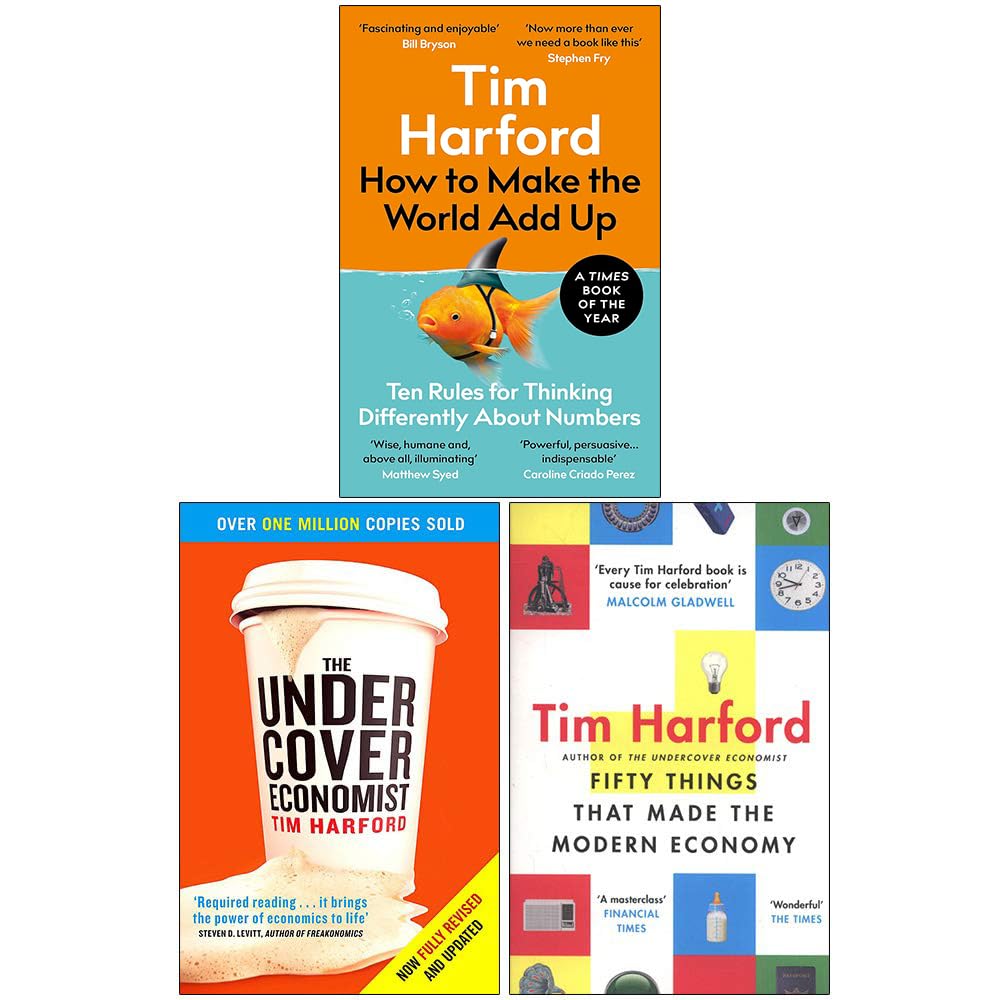
Titles in This Set:
How to Make the World Add Up
The Undercover Economist
Fifty Things That Made the Modern Economy
Format: Paperback
Overview:
This three-book paperback collection presents Tim Harford’s signature blend of clear storytelling and rigorous analysis, bringing economics and data literacy to life for readers at every level. It pairs How to Make the World Add Up, The Undercover Economist, and Fifty Things That Made the Modern Economy into a cohesive, portable primer on how numbers, markets, and ideas shape everyday life. Readers will explore practical approaches to thinking with data, learn how markets quietly direct our choices through price signals, and travel through history to discover fifty transformative innovations that quietly power our modern world. The tone stays approachable and engaging, turning complex concepts into relatable insights and real-world applications. Whether you’re a curious beginner or a seasoned reader of non-fiction, this set offers a thoughtful, accessible path to understanding how economies operate and how human ingenuity drives progress. It’s a compelling gift for lifelong learners, students, professionals, and anyone who enjoys clear explanations that illuminate everyday life.
What This Collection Covers:
The collection charts a logical progression from numeracy to market forces and then to the big ideas that changed civilization. It begins with practical rules for thinking about numbers, demystifying statistics, highlighting biases, and showing how data can reveal truth rather than mislead. The Undercover Economist then reveals how markets quietly organize prices, incentives, and decisions in daily life—from the cost of a cup of coffee to the groceries on our shelves—uncovering the hidden drivers behind our spending choices. Rounding out the trio, Fifty Things That Made the Modern Economy surveys fifty pivotal inventions and ideas, from agricultural innovations to information technology, explaining how incremental improvements accumulate into sweeping social and economic change. Together, the books emphasize data literacy, critical thinking, and an appreciation for the often-invisible infrastructure of modern life. This set is ideal for readers who enjoy accessible nonfiction, smart storytelling, and practical lessons about economies in action.
Book-by-Book Guide:
How to Make the World Add Up
Tim Harford breaks down statistics into actionable lessons, inviting readers to question headlines, test claims, and apply straightforward methods to everyday data. The narrative blends engaging anecdotes with practical techniques for evaluating evidence, making it easier to separate signal from noise in politics, health, finance, and daily life. Readers learn to distinguish correlation from causation, consider biases, and design quick checks to verify what they read. The result is a confident, hands-on guide to turning numbers into meaningful insight, encouraging readers to question assumptions and view the world through a clearer statistical lens. It’s a practical invitation to think differently about the numbers that shape decisions and outcomes. The Undercover Economist
Harford peels back the curtain on how markets price the ordinary things we buy and the everyday choices we make. The book reveals how location, branding, supply chains, and information shape prices in surprising ways. Through lively case studies—from coffee to groceries—readers see how incentives steer behavior and how small structural shifts propagate through economies. The narrative makes economics tangible, equipping readers to interpret price signals, policy debates, and consumer routines with sharper eyes. It’s a relatable exploration of the invisible forces that govern daily life, helping readers understand why the world costs what it does and how price, value, and competition interact in unseen ways. Fifty Things That Made the Modern Economy
Harford takes readers on a historical tour of fifty pivotal inventions and ideas that quietly powered modern progress. Each chapter examines a single breakthrough—from the plough to the barcode—demonstrating how small, often overlooked improvements accumulate to transform societies. The book blends historical storytelling with clear explanations, making complex technology and policy accessible to non-specialists. Readers gain a broad, engaging map of modern life and learn why certain ideas became universal standards. It’s a lively, inspiring survey of innovation that invites curiosity about the everyday forces that shape prosperity and opportunity.
Who This Set Is Perfect For:
This collection is ideal for lifelong learners, students, and professionals who relish accessible nonfiction that connects big ideas to everyday experiences. It’s particularly valuable for readers seeking to strengthen data literacy, understand how markets influence daily life, or gain historical context for modern technology. The set also makes a thoughtful gift for teachers, colleagues, graduates, or book clubs exploring economics, public policy, or social science. Whether read cover-to-cover or enjoyed as a series of compact, stand-alone insights, the trio supports curious minds who appreciate clear explanations, practical applications, and a broader perspective on how economies function in the real world.
Key Benefits:
- Strong, readable introductions to data literacy and economic thinking
- Three distinct angles on prices, incentives, and innovation
- Portable paperback format for commuting, study, or travel
- Perfect for gifting students, professionals, or curious readers
- Excellent companion for classrooms or book clubs exploring economics
About the Author:
Tim Harford is an economist and writer known for translating complex economic ideas into engaging, accessible narratives. Through his books and journalism, he explores how incentives, information, and institutions shape everyday life, from consumer choices to global trends. In this collection, Harford threads data literacy with practical storytelling, offering readers a coherent pathway from basic numeracy to the broader dynamics of markets and innovation. His clear, conversational style—grounded in real-world examples—helps readers connect theory to practice and see how economic thinking can illuminate daily decisions, policy discussions, and moments of technological advancement.
Why You’ll Love This Set:
Owning the complete three-book collection provides a cohesive, thought-provoking tour of how economies operate and how ideas drive progress. The paperback format makes it easy to carry, read in short sessions, or annotate for study. The trio fits well for readers who enjoy insightful, evidence-based storytelling that ties statistics, markets, and invention into a single, readable narrative. It’s an ideal gift for students entering economics, professionals seeking a refresher, or anyone who loves discovering the hidden mechanics behind everyday life. This set invites curiosity, conversation, and a deeper appreciation for the quiet forces that shape our world.
Please Note: The individual books included in this listing will be dispatched as per the original UK ISBN and UK edition cover image shown in the image.
- Choosing a selection results in a full page refresh.