

1
3


✔ In stock and ready to ship
🚚 Order within calculating... to receive it by
calculating...
✅ Fully tracked delivery on every order
📦 Tracking details sent instantly when your order ships
⭐⭐⭐⭐⭐ 4.8/5 rating from 7,500+ verified customers
🔒 Secure checkout with Visa, Mastercard, Amex, PayPal & Shop Pay
SKU:
MAN-VRT-U290645-9789124282684
Barcode:
9789124282684
Titles in This Set:
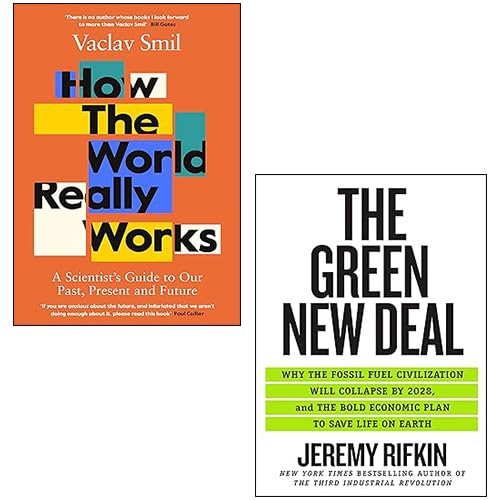
How the World Really Works
The Green New Deal
Format: Paperback
Overview:
This two-book collection gathers two influential voices in non-fiction to illuminate how global systems function and how societies might navigate a sustainable future. Vaclav Smil’s How the World Really Works delivers a rigorous, data-driven look at energy, materials, and industrial metabolism, grounding readers in the physical realities that shape economies and daily life. Complementing Smil, Jeremy Rifkin’s The Green New Deal offers policy-forward perspectives on decarbonization, infrastructure investment, and social renewal, presenting pragmatic steps toward a low-carbon economy. Together, this paperback set provides a balanced exploration of the forces driving growth, consumption, and climate outcomes. Readers will appreciate the complementary angles: Smil’s macro-scale analysis and Rifkin’s policy-oriented roadmap, which together foster a deeper, evidence-based understanding of how energy transitions unfold and how societies can adapt responsibly. It’s an essential gift for curious readers, students, and professionals seeking credible, accessible insights into energy, policy, and sustainability.”
What This Collection Covers:
This collection surveys two complementary approaches to global change. Smil’s How the World Really Works dissects energy systems, resource flows, and the long arc of technological progress to reveal why economies develop as they do and how infrastructure constrains or enables growth. He grounds complex ideas in data and historical context, helping readers see the relationships between energy intensity, manufacturing, and everyday life. Rifkin’s The Green New Deal translates those dynamics into a policy-centered blueprint for reform, advocating large-scale investments in renewables, efficiency, and workforce adaptation. The collection helps readers connect theory to practice—explaining grid integration, supply chains, and the politics of transition while offering a realistic sense of what ambitious reforms require in terms of time, investment, and collaboration. Ideal for study, discussion, and informed decision-making, the set equips readers to engage thoughtfully with current debates on energy, economy, and climate policy.
Book-by-Book Guide:
How the World Really Works
In this foundational work, Vaclav Smil invites readers to look past headlines and vanity metrics to the physical realities underpinning modern life. The book traces how energy flows, material consumption, and land use determine economic growth and technological progress. Smil’s data-driven narrative demystifies why large-scale transformations occur gradually, why energy matters at every scale—from household choices to national policy—and how infrastructure and policy interact with human behavior. The prose is precise yet accessible, inviting readers to develop a durable intuition for the limits and possibilities of progress. This is essential reading for students, policymakers, professionals, and curious minds who want a grounded framework for analyzing global systems and the true costs of change.
The Green New Deal
Jeremy Rifkin offers a policy-forward examination of how to align economic reform with climate action. The book argues for comprehensive investments in renewable energy, smart grid systems, and efficiency improvements, paired with policies that re-skill workers and democratize access to opportunity. Rifkin blends historical context with economic analysis to outline a viable trajectory for decarbonization that also supports social welfare and employment. He emphasizes collaboration across government, industry, and civil society, urging readers to consider how infrastructural modernization can unlock economic renewal while reducing emissions. Written for a broad audience, the work invites practical planning, bold but feasible goals, and a hopeful path toward a resilient, low-carbon future.
Who This Set Is Perfect For:
This two-book collection is ideal for students studying energy systems, environmental policy, economics, or geography, as well as professionals in energy, infrastructure, and sustainability fields seeking a credible, well-argued foundation. It also suits readers who enjoy thoughtful, data-informed non-fiction and want to understand the broader forces shaping climate policy and global development. Gift buyers will find a comprehensive, high-credibility set that supports study groups, reading clubs, classrooms, and personal exploration. Fans of rigorous analysis and accessible writing will appreciate the complementary perspectives offered by Smil and Rifkin, making this collection valuable for both newcomers and informed readers alike.
Key Benefits:
- Two authoritative, widely respected voices on energy, policy, and sustainability
- Clear, data-driven explanations of complex systems and their real-world impacts
- Complementary perspectives: empirical analysis paired with actionable policy ideas
- Ideal for teaching, study, reference, and thoughtful discussion
- Great gift set for students, researchers, and environment-conscious readers
- Accessible paperback edition suitable for frequent use and quick reference
About the Author:
Vaclav Smil is a renowned energy systems scientist and prolific author whose work explores the interconnections of energy, environment, and civilization. His meticulous, data-driven approach has shaped how policymakers and scholars understand the material foundations of modern life, with influential titles such as Energy and Civilization and Physical Theory of Power contributing to decades of scholarship. Jeremy Rifkin, an econom ist and social theorist, writes extensively on energy, climate, and economic transformation. Known for his thought-provoking analyses of the post-industrial era, Rifkin emphasizes policy design, infrastructure modernization, and the social implications of energy transition. Together, Smil and Rifkin bring complementary expertise—the former grounding readers in the physics of progress, the latter outlining practical routes to a sustainable, inclusive future.
Why You’ll Love This Set:
This set offers a coherent, authoritative lens on how energy and policy intersect to shape our world. Readers gain a robust understanding of past progress, present constraints, and future possibilities, making it a valuable reference for research, classroom use, and informed discussion. The complete collection provides better context than individual titles alone, encouraging critical thinking about sustainability, economic reform, and societal resilience. With accessible writing and rigorous analysis, it’s a reliable, enduring addition to any library—perfect for personal study, academic work, or thoughtful gifting to fellow readers who value evidence-based perspectives on climate and economy.
Please Note: The individual books included in this listing will be dispatched as per the original UK ISBN and UK edition cover image shown in the image.
- Choosing a selection results in a full page refresh.