

1
7


✔ In stock and ready to ship
🚚 Order within calculating... to receive it by
calculating...
✅ Fully tracked delivery on every order
📦 Tracking details sent instantly when your order ships
⭐⭐⭐⭐⭐ 4.8/5 rating from 7,500+ verified customers
🔒 Secure checkout with Visa, Mastercard, Amex, PayPal & Shop Pay
SKU:
USA-9789123759385
Barcode:
9789123759385
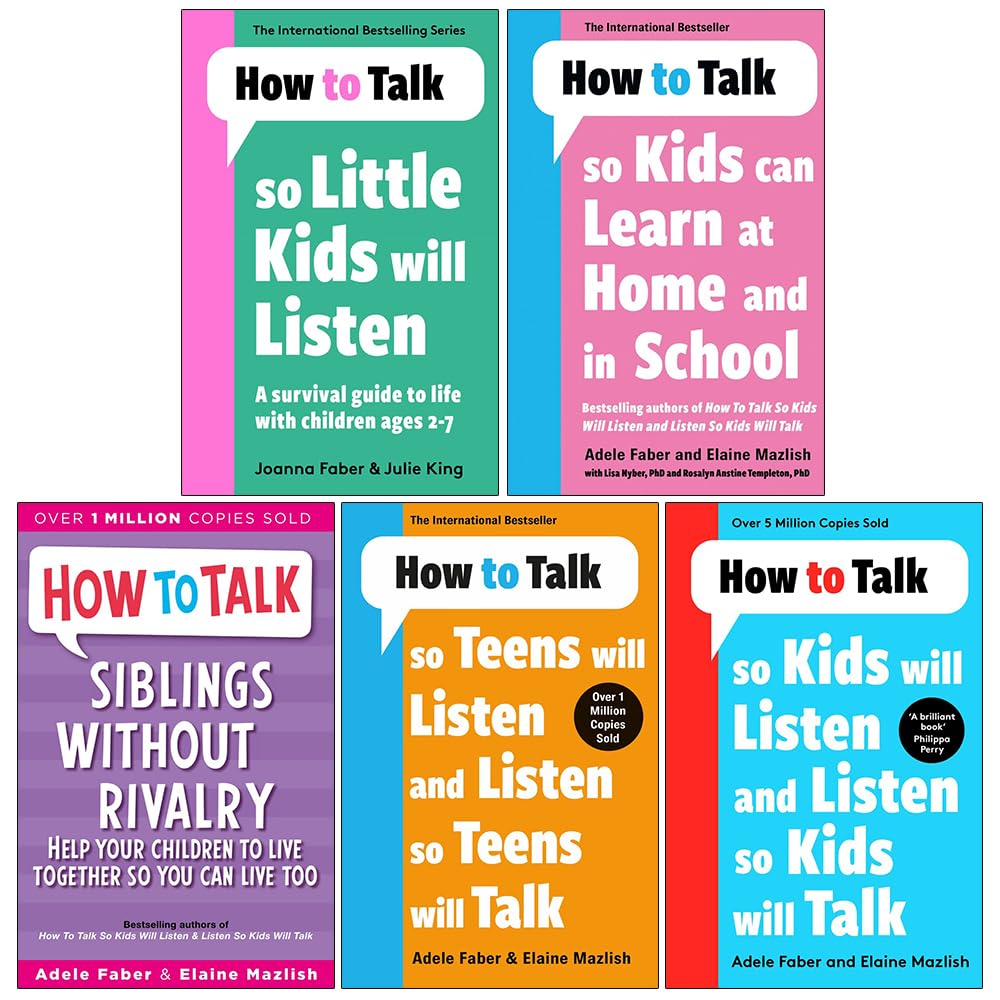
Titles in This Set:
How to Talk So Kids Will Listen and Listen So Kids Will Talk
How to Talk So Kids Can Learn at Home and in School
How to Talk So Little Kids Will Listen
How to Talk So Teens Will Listen and Listen So Teens Will Talk
Siblings Without Rivalry
Format: Paperback
Overview:
This five-book collection brings together a trusted, practical toolkit for family communication across ages and stages. From toddlers to teens, Adele Faber and Elaine Mazlish offer time-tested, step-by-step strategies to invite cooperation, set boundaries with respect, and resolve conflicts through calm, empowering dialogue. Each volume blends real-life conversations, lighthearted cartoons, and actionable exercises designed for home life, classroom settings, and everyday moments. The collection is equally valuable for new parents laying solid foundations and seasoned caregivers seeking to refine their approach. Whether navigating toddler testing, school-time misunderstandings, sibling dynamics, or teenage independence, readers gain concrete techniques to talk with children—and, importantly, to listen. The accessible tone, practical scripts, and inclusive guidance make this set a timeless reference for building trust, confidence, and cooperative behavior within the family unit.
What This Collection Covers:
Across these five titles, the collection offers developmentally appropriate communication strategies tailored to toddlers, children, and teens, with emphasis on respect, empathy, and collaborative problem solving. Readers learn to invite cooperation rather than rely on pressure or punishment, using consistent scripts, prompts, and routines that foster listening and voluntary participation in decisions. The set also bridges classroom and home life, helping parents and educators align messages and practices across environments. With age-appropriate scenarios and universal themes, the collection supports calmer family routines, stronger connections, and more constructive conversations in everyday life, creating a common language for parents, caregivers, and teachers alike.
Book-by-Book Guide:
How to Talk So Kids Will Listen and Listen So Kids Will Talk — This foundational guide offers practical communication tools designed to reduce power struggles and invite cooperation. Through accessible dialogues and straightforward techniques, the book shows how to acknowledge feelings, set respectful boundaries, and invite children’s ideas into problem solving. Real-life family scenarios demonstrate how conflicts can become teachable moments, whether at mealtime, while doing homework, or at bedtime. The result is calmer conversations, greater mutual respect, and a lasting sense of partnership between adults and children, built on listening, empathy, and collaborative problem solving. How to Talk So Kids Can Learn at Home and in School — Applying the core methods to education and daily routines, this volume shows how to invite cooperation in learning tasks, avoid punitive responses, and use positive language to motivate children in assignments and classroom activities. It emphasizes building intrinsic motivation, reducing resistance, and creating learning environments where kids feel heard and supported. Practical examples illustrate how to connect curriculum goals with home routines, helping children transfer skills from home to school and back again, with consistent guidance across settings. How to Talk So Little Kids Will Listen — Tailored for younger children, this survival guide translates adult communication tools into age-appropriate moments with two- to seven-year-olds. The book focuses on capturing little ones’ attention, validating feelings, and offering respectful options that promote cooperation without shouting or threats. Readers discover concrete scripts to handle common challenges—brushing teeth, tidying up, sharing, and transitions—while preserving a warm, collaborative tone that preserves the child’s dignity and agency. How to Talk So Teens Will Listen and Listen So Teens Will Talk — This volume translates the core concepts for adolescents, addressing the specific dynamics of parent-child relationships during the teenage years. It offers strategies to reduce power struggles, foster autonomy, and maintain open dialogue in the face of moodiness, independence, and evolving identities. Concrete scenarios and interchangeable scripts help parents engage teens in conversations about responsibility, safety, and future plans, while modeling listening and respect that teens can mirror in return. Siblings Without Rivalry — Focusing on the most challenging dynamic in many families, this book provides guidance for easing sibling tension and promoting cooperative, supportive relationships. It emphasizes fair boundaries, empathy between siblings, and routines that minimize competition while maximizing collaboration. Practical scripts, activity ideas, and family rituals help families cultivate harmony, reduce comparisons, and support each child’s unique strengths—creating a more peaceful home environment.
Who This Set Is Perfect For:
This collection is an invaluable resource for new parents seeking solid foundations and seasoned caregivers aiming to refine communication with children across ages. It’s ideal for families juggling toddlers, school-age children, and teens, as well as teachers, homeschooling parents, and caregivers who want consistent, effective dialogue strategies. Gift buyers will appreciate a robust, life-enhancing toolkit that translates into calmer days, more cooperative behavior, and stronger parent-child connections. Whether used for parenting education, bedtime routines, or classroom newsletters, the set offers a unified language for nurturing trust, empathy, and collaborative decision-making within the family unit.
Key Benefits:
- Proven, practical scripts that reduce power struggles
- Cross-age strategies that align home and school environments
- Empathy-focused communication to boost cooperation
- Easy-to-apply exercises and cartoons that reinforce learning
- Tools for managing siblings and improving family harmony
- Clear guidance for caregivers, teachers, and parents alike
About the Author:
Adele Faber and Elaine Mazlish are renowned voices in parent-child communication, celebrated for transforming everyday conversations into collaborative, respectful exchanges. Their How to Talk series has guided millions of families worldwide, offering accessible methods that empower both adults and children. The authors bring decades of workshop experience, practical insights, and a deep commitment to nurturing confident, empathetic young people. Their work is widely used by parents, educators, and counselors as a cornerstone of constructive dialogue, conflict resolution, and relationship-building within family and classroom settings.
Why You’ll Love This Set:
Owning the complete five-book collection provides a cohesive framework for communicating with children at every stage of development. The set supports consistent messaging, reduces friction, and helps families build lasting routines that foster trust and cooperation. With engaging real-life scenarios and actionable strategies, readers gain confidence to navigate daily challenges—from toddler tantrums to teen independence—while strengthening bonds and creating a more peaceful, mutually respectful home life.
Please Note: The individual books included in this listing will be dispatched as per the original UK ISBN and UK edition cover image shown in the image.
- Choosing a selection results in a full page refresh.