

1
1
✔ In stock and ready to ship
🚚 Order within calculating... to receive it by
calculating...
✅ Fully tracked delivery on every order
📦 Tracking details sent instantly when your order ships
- Free US shipping on orders over $99 · $3.99 under $99
- Dispatched in 1–2 business days · delivery in 3–7 business days from dispatch via USPS (US only)
- 14-day returns from the date of delivery
⭐⭐⭐⭐⭐ 4.8/5 rating from 7,500+ verified customers
🔒 Secure checkout with Visa, Mastercard, Amex, PayPal & Shop Pay
SKU:
PLD17311
Barcode:
9781398805422
Titles in This Set:
Incidents in the Life of a Slave Girl
Narrative of the Life of Frederick Douglass, an American Slave
Up from Slavery: An Autobiography
The Underground Railroad
Twelve Years a Slave
Format: Paperback
Overview:
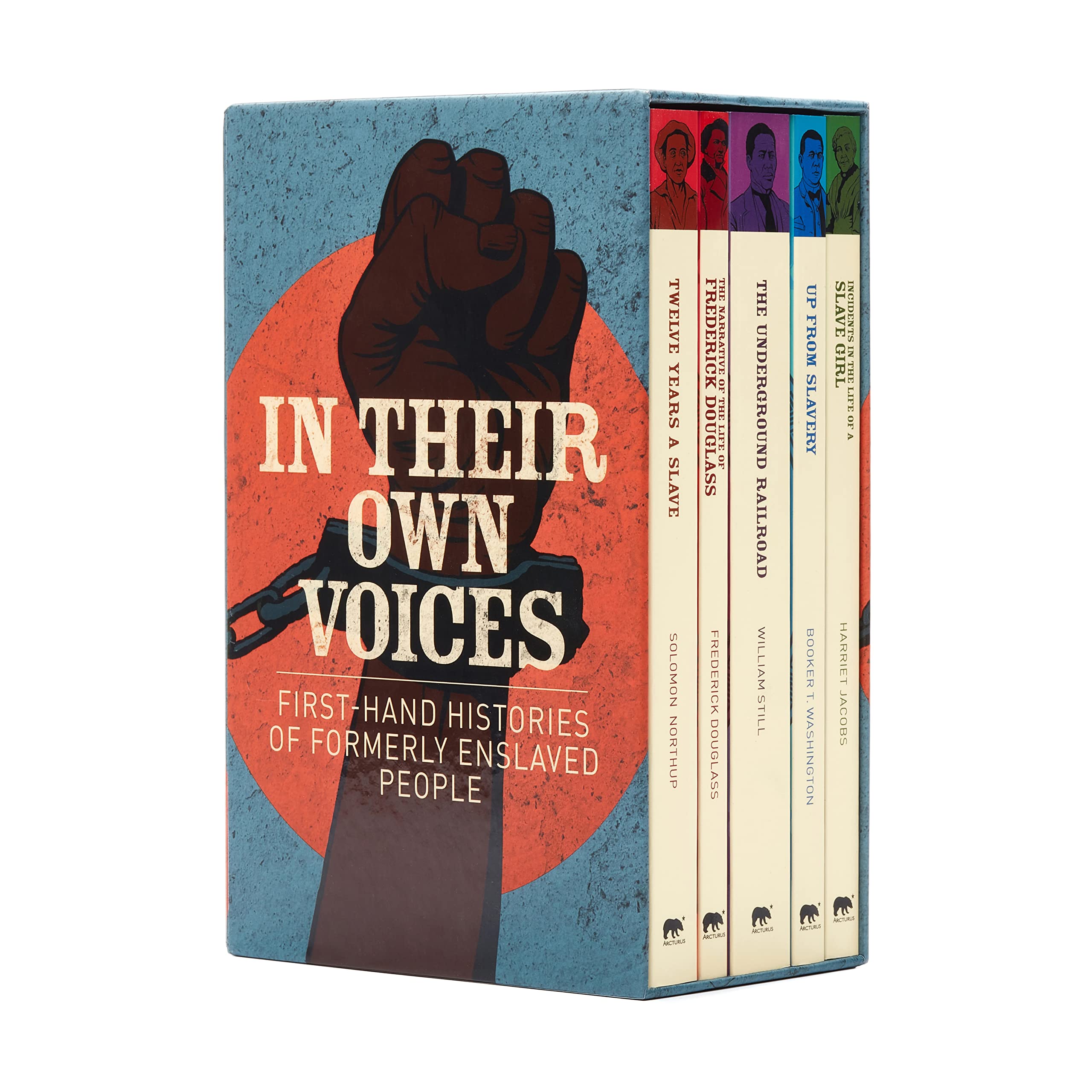
In Their Own Voices gathers five firsthand histories that illuminate slavery from multiple angles. This paperback collection brings together Harriet Jacobs's Incidents in the Life of a Slave Girl, Frederick Douglass's Narrative, Booker T. Washington's Up from Slavery, William Still's The Underground Railroad, and Solomon Northup's Twelve Years a Slave. Each memoir speaks in a distinct, intimate voice, offering unflinching portraits of bondage, resistance, literacy, and the long struggle toward emancipation. Readers encounter courage, cunning, and endurance in the face of dehumanizing power, and they witness the humanity of individuals whose lives are too often erased from broader histories. The set is an essential resource for students, history lovers, and families seeking authentic primary-source perspectives that bring the past to vivid life.
What This Collection Covers:
Across these five volumes the collection presents a spectrum of experiences within slavery and its aftermath. Jacobs foregrounds gendered oppression and maternal bonds; Douglass shows intellectual awakening and self-efficacy; Washington emphasizes education and self-help as engines of progress; Still documents organized networks that moved people toward freedom; Northup delivers a vivid, unflinching account of captivity and resilience. Together they illustrate how literacy, community support, and strategic cooperation could reshape destinies even within brutal systems. This collection not only preserves historical facts but also humanizes history, inviting readers to compare perspectives, analyze rhetoric, and understand how personal testimony informs national memory.
Book-by-Book Guide:
Incidents in the Life of a Slave Girl is a fearless, intimate memoir that centers the female experience within slavery. Jacobs writes with candor about sexual coercion, maternal love, and the relentless barriers that kept families apart. She chronicles a perilous plan to secure freedom for herself and her children, using wit, endurance, and careful risk-taking. The narrative foregrounds the cost of survival and the moral complexity of her choices, while never diminishing the humanity of those enslaved. This edition preserves the raw honesty and moral urgency that have made Jacobs's voice a touchstone of abolitionist literature.
Narrative of the Life of Frederick Douglass, an American Slave blends searing testimony with lucid political argument. From a child learning to read to a man who outmaneuvers bondage, Douglass's voice stays precise, persuasive, and deeply humane. He exposes the brutality of slaveholding, the hypocrisy of religious sanction, and the everyday violence that sustained oppression. The memoir remains a foundational document of abolition, offering both a personal journey to freedom and a rigorous critique of a system built on dehumanization. Readers gain a masterclass in self-education, resilience, and the power of voice.
Up from Slavery: An Autobiography offers a pragmatic, hopeful road map from bondage to leadership. The memoir emphasizes education, apprenticeship, and self-discipline as pathways to opportunity for Black Americans after emancipation. Washington's voice is measured, pragmatic, and forward-looking, inviting readers to see schooling and work as engines of progress for individuals and communities. While it presents a specific strategy for advancement, the text also engages with broader debates about race, economics, and civic responsibility in postwar America.
The Underground Railroad records the courage of countless freedom-seekers and the networks that sustained them. Still writes with care, compiling testimonies, names, and journeys into a structured, humane narrative. The book illuminates the bravery of conductors, formerly enslaved people, and supporters who transformed danger into possibility. Readers meet real individuals—each with a dream and a stake in liberty—while gaining insight into the logistics of escape, the power of community, and the lasting impact of coordinated resistance on American history.
Twelve Years a Slave gives a stark, firsthand account of captivity and endurance. The memoir's unembellished prose renders plantation life with visceral immediacy, from daily toil to the constant threat of violence. Northup's memory becomes a powerful indictment of slavery and a testament to the endurance of the human spirit. The narrative's clear chronology invites readers to trace the long arc of denial, struggle, and eventual freedom, making it essential for understanding enslaved experiences in the antebellum South.
Who This Set Is Perfect For:
Ideal for students beginning their study of slave narratives, this five-volume collection also suits history buffs and curious readers who want authentic, primary-source voices. It works well in classrooms and homes alike, fostering discussion about race, literacy, resistance, and human dignity. The breadth of perspectives—from Jacobs's female-centered experience to Douglass's abolitionist rhetoric to Washington's pragmatic uplift—provides a robust foundation for comparative reading, research projects, and literary analysis. Gift buyers will appreciate a thoughtfully curated set that invites meaningful conversations across generations.
Key Benefits:
- Five firsthand narratives offering diverse perspectives on slavery
- Crosses gender, regional, and historical contexts
- Strong primary-source material for study and research
- Readable paperback edition ideal for group reading
- Useful for classrooms, book clubs, and homeschooling
- Enhances understanding of literacy, resistance, and community
About the Author:
These five works emerge from voices that shaped American history through abolition, education, and the fight for freedom. Harriet Jacobs's courageous memoir exposes gendered oppression and maternal resilience; Frederick Douglass's eloquent narratives blend personal escape with a fierce critique of slavery; Booker T. Washington's Up from Slavery advocates practical education and self-improvement as routes to dignity; William Still's Underground Railroad histories illuminate communal networks and courageous organizers; Solomon Northup's Twelve Years a Slave documents the brutal realities of bondage from a free man's perspective. Together, these voices anchor a essential canon of slave narratives that continue to inform scholarship, civil rights discourse, and readers' understanding of the endurance of the human spirit.
Why You’ll Love This Set:
Five unforgettable voices, one essential collection. This set delivers breadth and depth in a compact paperback, making primary-source histories accessible for students and general readers alike. Owning the complete set means you can compare perspectives, track themes such as literacy, freedom, and community, and use them as a long-term reference for research or teaching. The approachable format invites discussion, while the authoritative voices invite deep empathy and critical reflection on America’s past—and how it informs the present.
Please Note: The individual books included in this listing will be dispatched as per the original UK ISBN and UK edition cover image shown in the image.
- Choosing a selection results in a full page refresh.