

1
3


✔ In stock and ready to ship
🚚 Order within calculating... to receive it by
calculating...
✅ Fully tracked delivery on every order
📦 Tracking details sent instantly when your order ships
- Free US shipping on orders over $99 · $3.99 under $99
- Dispatched in 1–2 business days · delivery in 3–7 business days from dispatch via USPS (US only)
- 14-day returns from the date of delivery
⭐⭐⭐⭐⭐ 4.8/5 rating from 7,500+ verified customers
🔒 Secure checkout with Visa, Mastercard, Amex, PayPal & Shop Pay
SKU:
VRT13441
Barcode:
9789123863433
Titles in This Set:
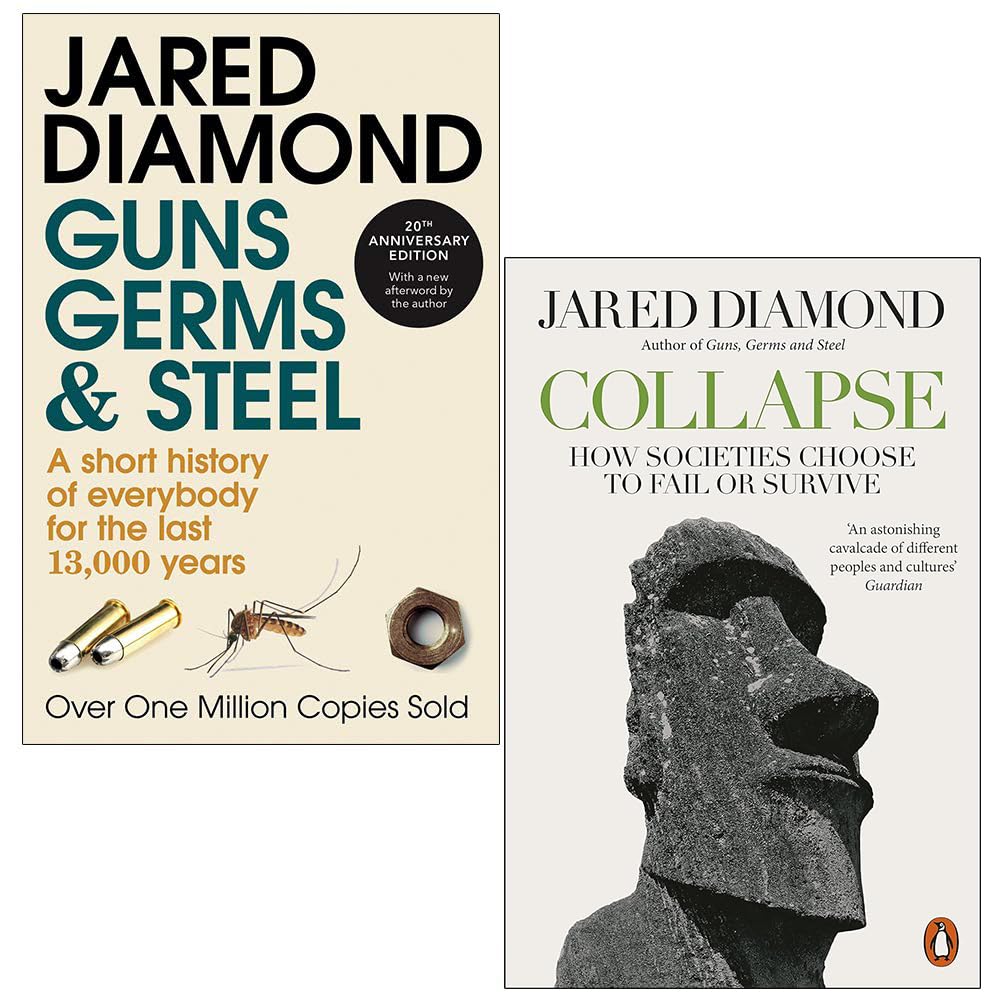
Guns, Germs, and Steel: The Fates of Human Societies
Collapse: How Societies Choose to Fail or Succeed
Format: Paperback
Overview:
This two-book collection by the award‑winning author Jared Diamond brings together two monumental works of non-fiction that have reshaped how we understand world history. Guns, Germs, and Steel offers a sweeping, evidence‑driven explanation for why certain civilizations rose to power and others did not, grounding its argument in geography, biology, and the diffusion of technology. Collapse extends the inquiry, examining how environmental stress, resource management, trade, and political organization influence whether societies endure or fall. Written in an engaging, richly researched voice, the books blend case studies with big‑picture analysis, inviting readers to rethink the human story beyond myths of progress. This paperback set is a compelling entry point for readers curious about how ecosystems, technology, and social choices intersect to shape the fate of nations. It’s a valuable addition to any non-fiction library, offering rigorous insight without sacrificing accessibility or narrative drive.
What This Collection Covers:
Across Guns, Germs, and Steel and Collapse, Diamond builds a unifying framework that places environment and biology at the center of historical change. The collection explores how the available plants and animals, the spread of pathogens, and the ease of cross-cultural exchange influence the development of technology, governance, and power. Guns, Germs, and Steel trace how agricultural and geographic luck contributed to the relative dominance of certain regions, while Collapse asks how ecological demands, climate variability, political decisions, and economic structures can push societies toward resilience or decline. The two volumes together offer a comprehensive view of human history that emphasizes long-term sustainability, adaptation, and the consequences of choices made by communities and leaders. Readers will gain a clearer sense of cause and effect across continents, eras, and ecological contexts, with practical takeaways for understanding current global challenges.
Book-by-Book Guide:
Guns, Germs, and Steel: The Fates of Human Societies — This landmark work argues that geography and biology—not intellect or intention alone—explain the uneven distribution of wealth and power across the world. Diamond demonstrates how the availability of domesticable plants and animals, together with continental layouts and lengthy ecological interactions, shaped the timing of agricultural development, technologies, and complex institutions. The narrative intertwines archaeology, anthropology, and history to reveal how diseases, writing, metallurgy, and centralized governance emerged in different regions. The book’s provocative thesis challenges simplistic narratives of cultural superiority, inviting readers to consider the structural factors that shape civilizations. Its clear, evidence-based storytelling makes it essential reading for anyone curious about world history, human resilience, and the forces that drive long-run social trajectories.
Collapse: How Societies Choose to Fail or Succeed — Diamond turns his lens to the vulnerability of civilizations faced with environmental and societal stress. By examining cases from the past as well as contemporary examples, he identifies recurring patterns—ecological overshoot, climate pressures, resource depletion, and fragile political systems—that can precipitate collapse. Yet the book also spotlights successful adaptations and reforms, underscoring the role of leadership, planning, and flexible institutions. Readers will follow a rigorous, multidisciplinary approach that links ecology, economy, and culture, offering practical insight into how societies can anticipate trouble signals and pursue sustainable solutions. The narrative remains accessible, thought-provoking, and highly relevant to readers concerned with global development and the future of civilizational resilience.
Who This Set Is Perfect For:
This collection is ideal for adults and curious older teens who love big‑picture non-fiction, cross‑disciplinary inquiry, and global history. It suits readers who enjoy science-informed explanations of social phenomena, students seeking clear, well-referenced frameworks for understanding civilizations, and book clubs exploring sustainability and political economy. Gift buyers will find it an impressive set for fans of thoughtful, evidence‑based writing, as well as educators looking for complementary texts for courses in history, geography, anthropology, or environmental studies. Whether you’re building a personal library, supporting classroom discussion, or seeking a challenging, rewarding read for long journeys, this two‑book collection offers depth, insight, and meaningful context for interpreting the past and predicting the future.
Key Benefits:
- Two essential non-fiction works in one paperback set for comprehensive study
- Clear, evidence-based analysis of how geography, biology, and ecology shape history
- Engaging cross-disciplinary storytelling suitable for readers of science, history, and social studies
- Accessible writing that invites discussion in classrooms, book clubs, and libraries
- Thoughtful exploration of resilience, sustainability, and policy implications
- A solid reference for understanding long-run patterns in world development
About the Author:
Jared Diamond is a renowned scholar whose work spans geography, biology, and history. A professor of geography at UCLA, Diamond has written several influential books that challenge conventional narratives about civilization. His research emphasizes the interconnectedness of environment and human society, and his clear, persuasive prose makes complex ideas accessible to a wide audience. Diamond’s writing blends disciplined scholarship with engaging storytelling, drawing on diverse case studies to illuminate how natural and cultural forces shape the trajectories of peoples and nations. This collection reflects his long-standing commitment to explaining global patterns in a way that is both rigorous and approachable, inviting readers to think critically about the past, present, and future of human life on Earth.
Why You’ll Love This Set:
If you’re seeking a thoughtful, intellectually stimulating pairing of foundational works, this Jared Diamond collection delivers. It offers a cohesive examination of how environments and human decisions influence civilization—from the rise of complex societies to the risks of environmental stress. The two titles complement each other, providing both explanatory breadth and cautionary perspective, making the set a valuable addition for personal reading, academic study, or gift‑giving to someone who enjoys nonfiction that informs, challenges assumptions, and remains highly readable.
Please Note: The individual books included in this listing will be dispatched as per the original UK ISBN and UK edition cover image shown in the image.
- Choosing a selection results in a full page refresh.