

1
3


✔ In stock and ready to ship
🚚 Order within calculating... to receive it by
calculating...
✅ Fully tracked delivery on every order
📦 Tracking details sent instantly when your order ships
- Free US shipping on orders over $99 · $3.99 under $99
- Dispatched in 1–2 business days · delivery in 3–7 business days from dispatch via USPS (US only)
- 14-day returns from the date of delivery
⭐⭐⭐⭐⭐ 4.8/5 rating from 7,500+ verified customers
🔒 Secure checkout with Visa, Mastercard, Amex, PayPal & Shop Pay
SKU:
MAN-FF-U2904-9789124278939
Barcode:
9789124278939
Titles in This Set:
An Artist of the Floating World
A Pale View of Hills
Format: Paperback
ISBN: [Not provided]
Overview:
This two‑book collection brings together Kazuo Ishiguro’s early masterpieces, An Artist of the Floating World (1986) and A Pale View of Hills (1982), in a cohesive paperback pairing that showcases the quiet power of literary memory. In An Artist of the Floating World, a retired Japanese painter named Masuji Ono looks back on a life lived through art, wartime propaganda, and the choices that shaped postwar Japan. The book’s restrained, precise prose invites readers to weigh Ono’s self‑justifications against the stark moral questions his past raises. A Pale View of Hills follows Etsuko, a Japanese woman living in England, as she revisits a hot Nagasaki summer and confronts family secrets that challenge her present identity. Together, these novels illuminate how memory operates as both shield and pressure, how nostalgia can blur fact, and how individuals negotiate guilt within shifting cultural landscapes. The set is a compelling entry point for readers drawn to introspective, psychologically finely wrought fiction by a Nobel Prize‑winning author.
What This Collection Covers:
The two novels in this set examine memory as a living force—how it distorts, preserves, and reveals the truth about who we were and who we become. Ishiguro’s protagonists inhabit fragile moral spaces where recollection and self‑examination collide with the social pressures of their eras. In postwar Japan, art and public memory intersect with personal memory, raising questions about responsibility, allegiance, and the compromises that define a life. Across the Nagasaki summer of A Pale View of Hills and the war‑era reflections of An Artist of the Floating World, the reader navigates two distinct yet complementary perspectives on history, guilt, and what remains when the smoke of conflict clears. This collection rewards careful reading and invites discussions about how memory shapes character, decisions, and the stories we tell about our pasts.
Book-by-Book Guide:
An Artist of the Floating World—In 1948, Masuji Ono, once a celebrated painter, tends to his garden and family while his mind drifts back to a life deeply touched by the rise of Japanese militarism. Ishiguro conducts a masterful long‑view dissection of memory, allowing Ono’s reflections to reveal as much about his self‑perception as about the historical moment he lived through. The narrative’s spare, economical style intensifies the tension between Ono’s attempts at self‑justification and the lingering shadow of his past choices. As the present interview with Ono’s memories accumulates, readers are invited to question what it means to remember—and whether memory is a faithful witness or a pliable storyteller. The result is a work of quiet, unsettling brilliance that lingers long after the last page.\n
A Pale View of Hills—Etsuko, living in England, recalls a summer in Nagasaki and the complex web of relationships among friends and family that followed. The memory she revisits is layered with ambiguity, especially around the suicide of her daughter and the enigmatic bond with Sachiko, a wealthy woman left adrift. Ishiguro’s prose is restrained, almost clinical, which heightens the sense that the narrator’s recollections may be as much a shield as a window. As the past unfurls, the reader confronts questions of motive, truth, and the price of survival under duress. The novel’s delicate, precise construction rewards patient readers with a subtle emotional payoff that resonates with the weight of history.
Who This Set Is Perfect For:
Ideal for adult readers who appreciate literary fiction that prioritizes character psychology and moral complexity, this two‑book collection is a superb gateway into Ishiguro’s broader oeuvre. It suits readers who enjoy introspective narratives, unreliable narration, and the slow reveal of deeper truths. Book clubs will find rich, discussion‑worthy material here—questions of memory, guilt, and the ways culture dictates memory provide fertile ground for conversation. It also makes a thoughtful gift for fans of serious, thoughtfully plotted novels, students studying postwar history or narrative reliability, and collectors seeking a compact pairing from a Nobel laureate renowned for precise, emotion‑curved storytelling.
Key Benefits:
- Two acclaimed novels from a Nobel Prize–winning author in one value set
- Thoughtful exploration of memory, guilt, and moral responsibility
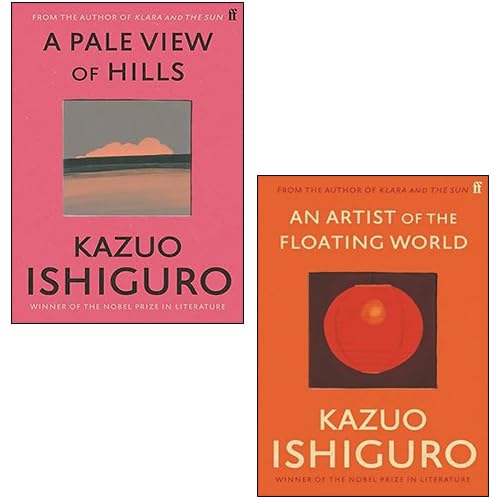
- Elegant paperback editions with classic UK cover art
- Accessible entry point to Ishiguro’s important early work
- Strong for book clubs and thoughtful gift options
- Compact, durable format ideal for home libraries and travel
About the Author:
Kazuo Ishiguro, born in Nagasaki, Japan in 1954 and raised in Britain, is one of contemporary literature’s most celebrated voices. His early novels—A Pale View of Hills (1982) and An Artist of the Floating World (1986)—established his hallmark: precise, understated prose that probes memory, truth, and the moral weight of the past. Ishiguro’s work grew to international prominence, earning him the Booker Prize for The Remains of the Day in 1989 and the Nobel Prize in Literature in 2017. His later novels, including Never Let Me Go and Klara and the Sun, expand on similar preoccupations with humanity, memory, and ethical responsibility. Across his career, Ishiguro has been praised for his restraint, empathy, and ability to illuminate uncomfortable truths through quiet, lucid storytelling—the hallmark of these two foundational early novels.
Why You’ll Love This Set:
This carefully curated two‑book collection offers a compact, immersive entry into Ishiguro’s distinctive world of memory and moral nuance. The pairing invites readers to compare how two different protagonists navigate the aftermath of conflict and personal history, enriching understanding of memory as a narrative instrument. It’s a valuable addition to any library—perfect for revisiting across years or sharing with fellow readers in a book club. The combination of A Pale View of Hills and An Artist of the Floating World provides a powerful, nuanced portrait of postwar consciousness and the quiet, enduring pull of the past—an ideal gift for lovers of thoughtful, character‑driven fiction.
Please Note: The individual books included in this listing will be dispatched as per the original UK ISBN and UK edition cover image shown in the image.
- Choosing a selection results in a full page refresh.