

1
1
✔ In stock and ready to ship
🚚 Order within calculating... to receive it by
calculating...
✅ Fully tracked delivery on every order
📦 Tracking details sent instantly when your order ships
⭐⭐⭐⭐⭐ 4.8/5 rating from 7,500+ verified customers
🔒 Secure checkout with Visa, Mastercard, Amex, PayPal & Shop Pay
SKU:
SINGLE-AB-U280150-9780593083529
Barcode:
9780593083529
Title:
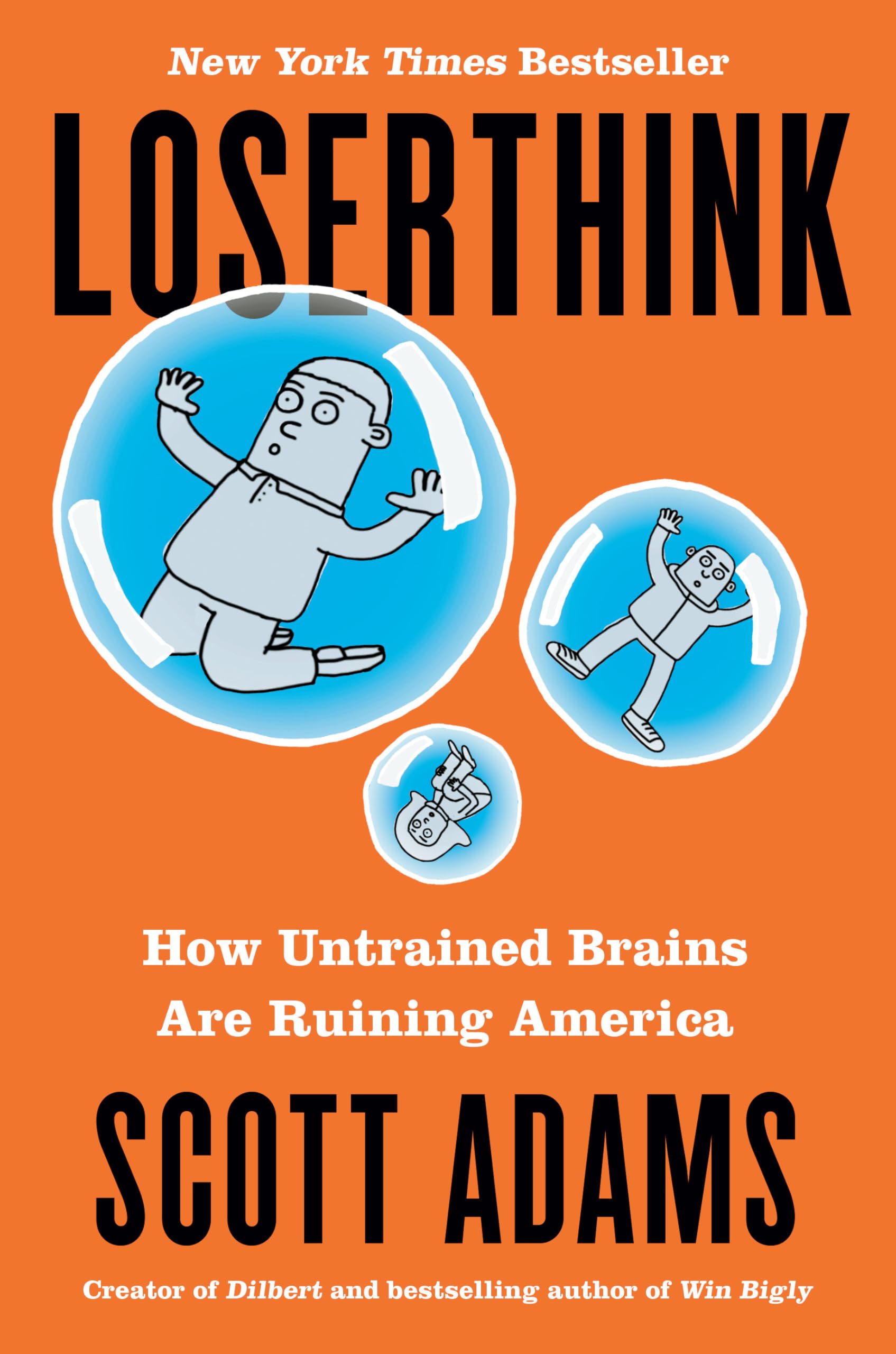
Loserthink: How Untrained Brains Are Ruining America
Format: Paperback
Overview:
Scott Adams's Loserthink investigates how untrained brains can misinterpret information, leading to conclusions that feel convincing but aren’t supported by evidence. He introduces the concept of “loserthink” to describe common patterns of faulty reasoning—habits of mind that derail judgment in politics, media, and everyday conversations. Written in a brisk, accessible voice, the book outlines why people cling to comforting myths, how emotions skew interpretation, and why evidence alone doesn’t always persuade when biases are at play. The goal is not to scold readers but to empower them with practical tools to recognize flawed arguments and strengthen their own reasoning. Adams combines clear explanations with relatable, real-world examples to show how easily misinformation can spread when critical thinking is sidelined. The work speaks to a broad audience: anyone seeking to think more clearly in a world saturated with headlines, clickbait, and rapid-fire commentary. It’s a thought-provoking introduction to media literacy and cognitive awareness, ideal for curious readers who want to engage more confidently in informed discussions while maintaining a sense of humor about the process.
What You’ll Discover Inside:
Inside Loserthink you’ll find a practical roadmap for recognizing flawed reasoning in yourself and others. Adams guides readers through common tipping points where conclusions leap ahead of evidence, showing how emotions, overgeneralizations, and selective reporting can warp judgment. The book offers simple, repeatable checks you can apply to claims, encourages verifying sources, and stresses intellectual humility as a daily habit. You’ll encounter concise explanations of why certain arguments fail—and how to reinterpret them with logic and evidence. By presenting approachable examples from politics, business, and everyday life, Adams invites readers to practice clearer thinking in real time. The aim is not to win debates but to refine your ability to assess information, resist sensationalism, and participate in conversations with greater clarity and calm.
Who It’s For:
Loserthink is written for a broad audience: readers who want to think more clearly, students exploring logic and media literacy, and professionals who navigate information-heavy environments. It appeals to fans of Scott Adams’s other work as well as anyone curious about how cognitive biases shape beliefs and decisions. The book is suitable for those seeking accessible nonfiction that explains complicated ideas without jargon, making it a good choice for self-education, classroom discussion, or thoughtful gift-giving. Whether you’re a casual reader, a newsroom watcher, or a busy manager aiming to communicate more effectively, you’ll find practical guidance that you can apply in everyday life and professional settings.
Key Highlights:
- Clear, accessible guide to critical thinking and cognitive biases
- Practical tips for testing claims and evaluating sources
- Timely insights drawn from contemporary politics, media, and everyday life
- Engaging, humorous voice that keeps complex ideas approachable
- Thoughtful frameworks to spot fallacies and flawed arguments
- Concise, readable introduction to thinking more clearly in a noisy information environment
- Ideal for personal growth, classroom discussion, or thoughtful gifting
About the Author:
Scott Adams is best known as the creator of the Dilbert comic strip, a longstanding cultural touchstone in workplaces and beyond. Beyond his cartoons, he has authored several nonfiction books that explore persuasion, critical thinking, and the psychology of belief. Adams writes with a distinctive voice that blends humor, practical observations, and provocative questions about how people form opinions. His work emphasizes the value of evidence, logical reasoning, and disciplined thinking, inviting readers to examine their own assumptions without feeling attacked. While his perspectives can be controversial, his commitment to accessible, idea-driven discussion has attracted a broad readership across demographics. This book continues his tradition of presenting complex ideas in clear, memorable terms, helping readers cultivate sharper judgment in daily life and in public discourse.
Why You’ll Love This Book:
If you want a down-to-earth, no-nonsense guide to thinking more clearly amid today’s information deluge, Loserthink delivers. It offers practical tools you can apply immediately—checks for evidence, sources to verify, and a sober reminder to pause before leaping to conclusions. Adams’s engaging tone makes challenging topics approachable without dumbing them down, and the real-world examples help readers see how flawed reasoning operates in politics, media, and everyday conversations. This book is a trustworthy starting point for anyone interested in media literacy, personal growth, and better dialogue. Owning this title is a smart step toward more confident, evidence-based discussions and a calmer approach to navigating public discourse.
Please Note: The individual books included in this listing will be dispatched as per the original UK ISBN and UK edition cover image shown in the image.
- Choosing a selection results in a full page refresh.