

1
5


🚚 Order within calculating... to receive it by
calculating...
✅ Fully tracked delivery on every order
📦 Tracking details sent instantly when your order ships
⭐⭐⭐⭐⭐ 4.8/5 rating from 7,500+ verified customers
🔒 Secure checkout with Visa, Mastercard, Amex, PayPal & Shop Pay
SKU:
PLD2386
Barcode:
9789123934218
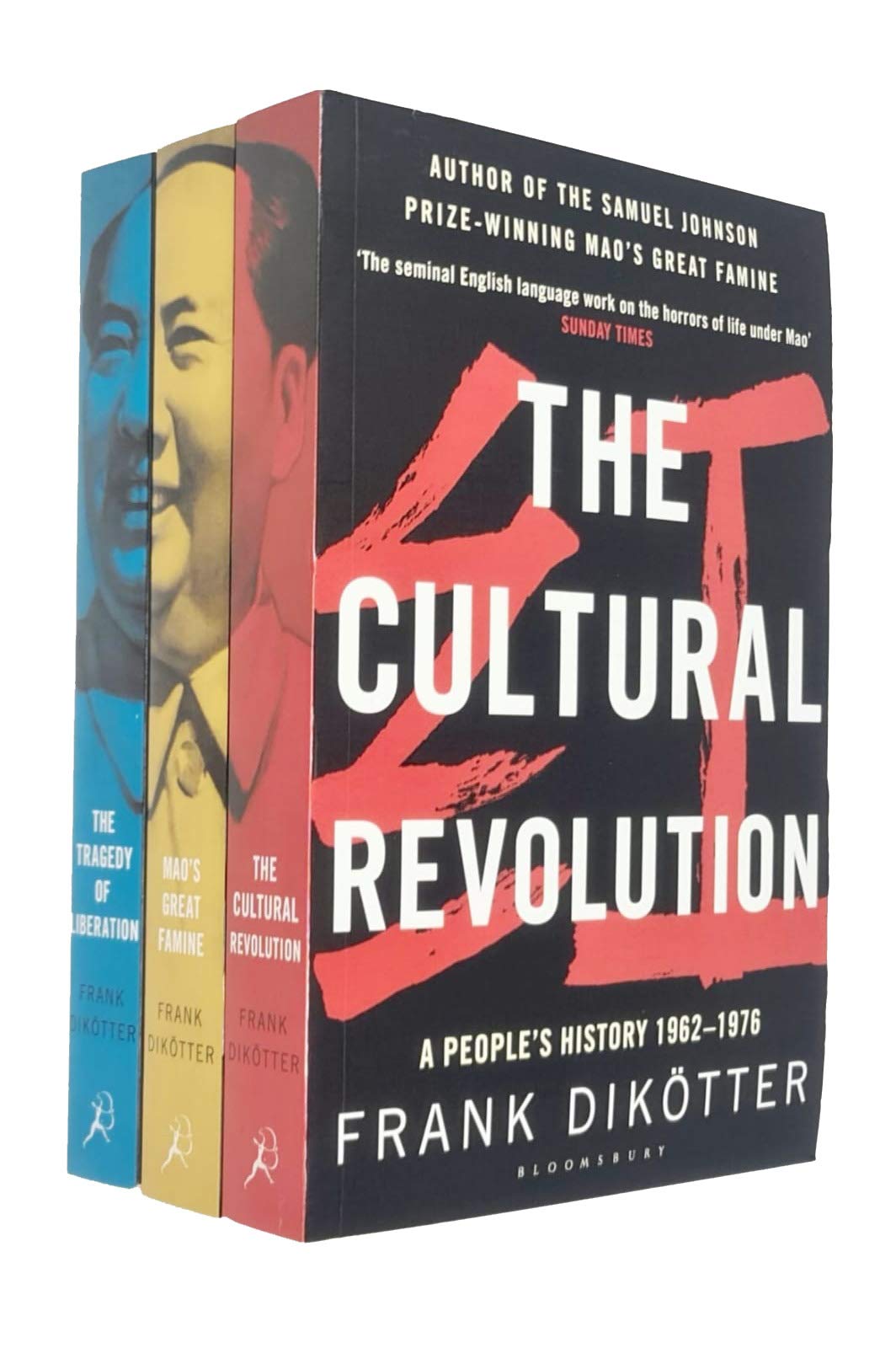
Titles in This Set:
Mao's Great Famine
The Tragedy of Liberation
The Cultural Revolution
Format: Paperback
Overview:
Delving into a pivotal era of modern history, this three-book collection by Frank Dikötter offers a piercing, evidence-driven portrait of Maoist rule in China. Mao's Great Famine traces the devastating consequences of the Great Leap Forward (1958–1962), where millions were affected by forced labor, starvation, and violence. The Tragedy of Liberation challenges the myth of liberation by exposing how the Communist leadership harnessed power to reshape daily life; it draws on newly opened party archives, interviews, and memoirs to illuminate the experiences of ordinary people under a totalitarian regime. The Cultural Revolution surveys the turbulent decade that followed, revealing how political campaigns were used to purge rivals and consolidate authority, often at the expense of civilians. Together, these volumes form a cohesive, unflinching account of one of the most tumultuous periods in 20th-century history, written for readers who want rigorous historical context and a clear-eyed, human-centered narrative.
What This Collection Covers:
Across these three volumes, Dikötter guides readers through a sequence of upheavals that reveal how ideology, policy, and personality shaped modern China. The collection traces shifts from rural reform to urban campaigns, mapping the evolution of political campaigns, propaganda, and social control. Rooted in archival sources, interviews, and memoirs, it pairs macro-level analysis with intimate vignettes of families, workers, and communities living under state power. The volumes fit both scholarly study and general curiosity, offering a coherent arc that helps readers connect policy decisions to daily life. With rigorous sourcing and accessible prose, the collection supports research while inviting informed discussion about the moral and social costs of authoritarian governance. It is an essential addition for course reading lists, library shelves, and any reader seeking a clear, evidence-based lens on Mao-era China.
Book-by-Book Guide:
Mao's Great Famine An unflinching examination of the famine years during the Great Leap Forward, this volume blends archival data, official records, and personal testimony. Dikötter traces how policy failures, forced collectivization, and political zeal converged to devastate rural communities, producing a catastrophe that millions did not survive. The narrative follows farmers, workers, and officials, linking macro decisions to daily hardship under state scrutiny. By foregrounding individual lives within structural causes, the book offers a precise, sobering account of how ideology translated into hunger and suffering. A must-read for rigorous modern history.
The Tragedy of Liberation Building on newly opened party archives and interviews, this volume argues that the 1949 revolution did not liberate the population but reorganized power through coercive governance. Dikötter shows how Mao's inner circle employed the state to shape daily life, purge rivals, and police loyalty. The narrative weaves large-scale campaigns with intimate stories of families under surveillance and fear. It challenges heroic narratives of liberation and illuminates how propaganda, political theater, and policy created lasting social change. A crucial contribution to understanding the origins of modern China's political culture.
The Cultural Revolution After the Great Leap Forward's disaster, the Cultural Revolution was launched to restore Mao's prestige and eliminate perceived enemies. Dikötter exposes public humiliation, mass campaigns, and the climate of fear that defined the era, showing how education, art, and daily life became battlegrounds for loyalty to the party. Drawing on archives and firsthand accounts, the book reveals ordinary people navigating denunciations, political loyalty tests, and rapid upheaval that reshaped Chinese society for years. A precise, human-centered study of a movement that altered generations.
Who This Set Is Perfect For:
Historians, students, and curious readers who want a rigorous, evidence-based look at modern China will find this three-volume collection indispensable. It suits university courses on Asia, modern history, or political science; it also makes a compelling gift for history buffs and readers who appreciate careful archival research. The accessible prose helps readers engage with dense material, while the scholarly approach supports deeper study. Fans of non-fiction that challenges conventional narratives will value the thorough sourcing and thoughtful analysis. This set is ideal for library shelves, reading groups, and anyone seeking to understand how political systems reshape everyday life.
Key Benefits:
- Three-volume set that covers Mao-era China from famine to cultural upheaval
- Evidence-based history grounded in archival sources and interviews
- Clear, readable narrative suited for study and casual reading
- Perfect gift for history lovers and collectors
- Excellent for classroom use and research projects
- Durable paperback edition designed for long-term use
About the Author:
Frank Dikötter is a historian known for his work on modern China and for building a coherent, data-driven narrative from archival sources. His approach blends quantitative data with qualitative testimony, offering readers a comprehensive view of how large-scale campaigns affected ordinary lives. Through the three volumes in this collection, Dikötter demonstrates how political ideology can translate into social and personal upheaval, and why careful sourcing matters in understanding history. His work has shaped discussions about the Mao era and remains essential reading for students and researchers seeking rigorous, accessible scholarship.
Why You’ll Love This Set:
Whether you’re building a modern-Chinese history bibliography or seeking a gripping, evidence-based read, this collection delivers. The three titles form a chronological, self-contained journey that rewards careful reading with deeper context and insight. The set’s cohesive voice across volumes makes it ideal for binge reading, research planning, or thoughtful gifting. The clear, source-driven narrative brings dense archival material to life, making complex history tangible and relevant for today’s readers.
Please Note: The individual books included in this listing will be dispatched as per the original UK ISBN and UK edition cover image shown in the image.
- Choosing a selection results in a full page refresh.