

1
1
✔ In stock and ready to ship
🚚 Order within calculating... to receive it by
calculating...
✅ Fully tracked delivery on every order
📦 Tracking details sent instantly when your order ships
- Free US shipping on orders over $99 · $3.99 under $99
- Dispatched in 1–2 business days · delivery in 3–7 business days from dispatch via USPS (US only)
- 14-day returns from the date of delivery
⭐⭐⭐⭐⭐ 4.8/5 rating from 7,500+ verified customers
🔒 Secure checkout with Visa, Mastercard, Amex, PayPal & Shop Pay
SKU:
SNG15529
Barcode:
9781529352566
Title:
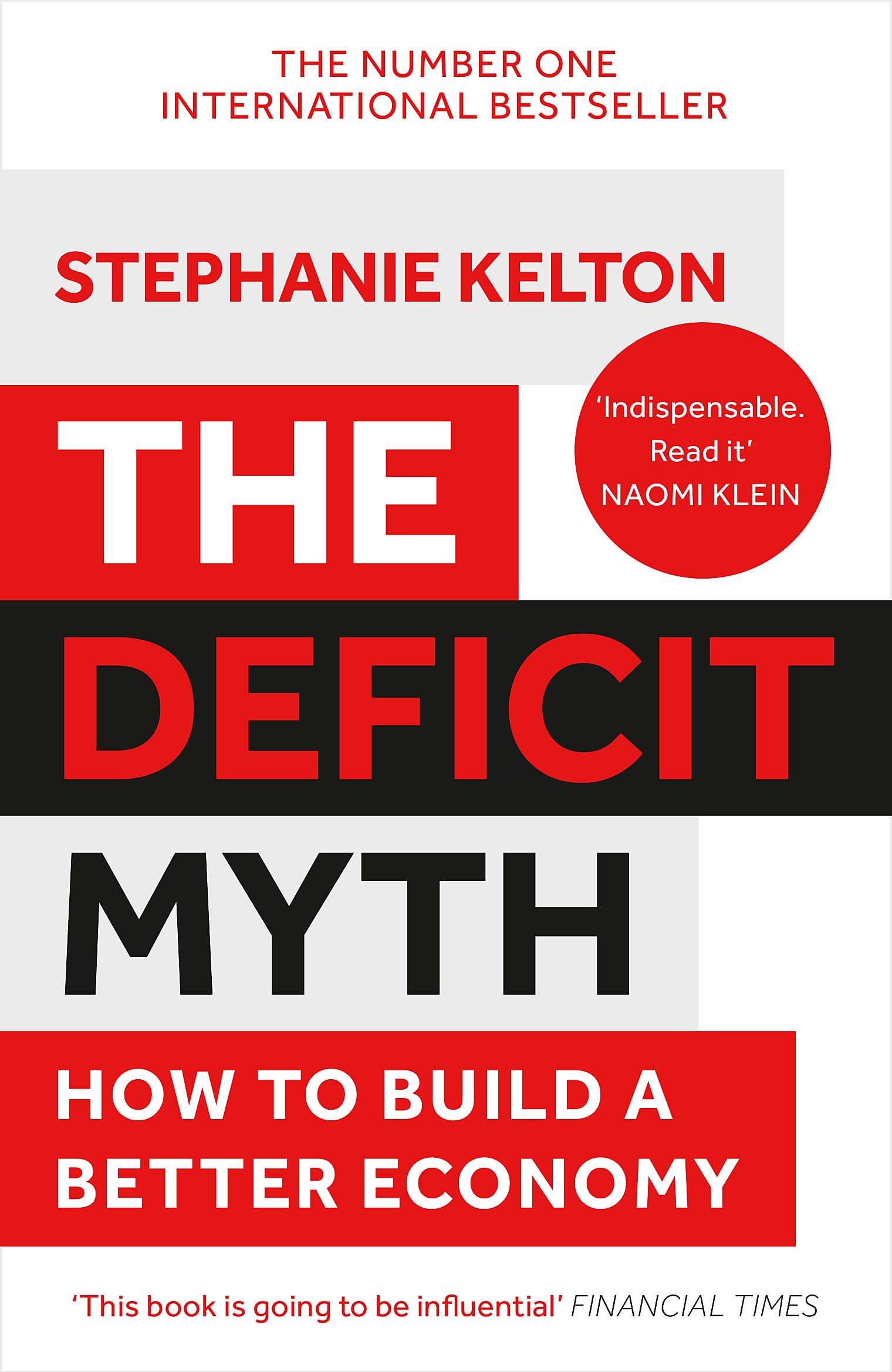
The Deficit Myth: Modern Monetary Theory and How to Build a Better Economy
Format: Paperback
ISBN: 9781529352566
Overview:
In The Deficit Myth, Stephanie Kelton offers a clear, accessible doorway into Modern Monetary Theory (MMT) and its implications for how we think about government budgets, public services, and the economy at large. Written for readers who want a practical, no-nonsense guide to reforming economic policy, this paperback edition distills complex ideas into compelling arguments about money sovereignty, full employment, and the real limits—rather than the imagined limits—on public spending. Kelton challenges the conventional wisdom that deficits must be endlessly curbed like a household budget, reframing deficits as a tool governments can use to invest in health care, education, climate action, and opportunity for all. The book has been widely recognized as a transformative, New York Times bestselling exploration of how monetary sovereignty, strategic policy choices, and intelligent money management can unlock a more equitable, resilient economy. Written in a confident, persuasive voice, The Deficit Myth invites readers to rethink policy trade-offs and to demand bold solutions in a time of economic upheaval. This edition remains a timely blueprint for students, policymakers, professionals, and anyone curious about how public money can be used to build a better future.
What You’ll Discover Inside:
You’ll gain a grounded understanding of how modern monetary systems actually function when a government issues its own currency, free from the myth that every dollar spent must be balanced by a prior tax. Kelton explains why taxes are less about funding current spending and more about shaping demand and controlling inflation, while deficits can support long-term investments in infrastructure, climate resilience, and social programs. The book also delves into the role of employment guarantees, the limits of monetary policy, and the misperceptions that tie economic policy to household budgeting. Readers will walk away with a practical framework for evaluating public investments, identifying when deficits matter, and recognizing the conditions under which ambitious policy can be sustainable and fair. The narrative is anchored in real-world examples and contemporary policy debates, making complex economic theory approachable without sacrificing rigor. As a result, this book serves as a trustworthy primer for anyone navigating policy discussions, classrooms, or thoughtful everyday conversations about how best to shape public spending for collective well-being.
Who It’s For:
This book is ideal for readers who want a clearer map of macroeconomics beyond conventional talking points. It speaks to students, educators, and professionals in economics, politics, journalism, and public policy, as well as curious readers seeking a practical, forward-looking perspective on how governments can finance ambitious programs without sacrificing stability. It’s valuable for policymakers and activists looking for a framework to evaluate climate investments, healthcare reform, education funding, and social safety nets. Gift buyers will find it a thoughtful option for graduates entering public service or for book clubs that enjoy accessible, evidence-based explorations of big ideas. Whether you’re new to economics or already versed in policy debates, this book offers a compelling, present-tense argument about using monetary policy to advance shared prosperity.
Key Highlights:
- New York Times bestseller status signals broad resonance and credibility.
- Clear, accessible introduction to Modern Monetary Theory (MMT) and its policy implications.
- Challenging the household-budget metaphor to reframe deficits as a tool for public investment.
- Practical guidance for evaluating government spending, inflation, and employment policy.
- Timely exploration of healthcare, climate action, and education funding through a monetary lens.
- Authored by a leading voice in economic policy and monetary theory.
About the Author:
Stephanie Kelton is a renowned economist and a leading advocate of Modern Monetary Theory. A former chief economist and policy adviser with extensive experience in public finance, she brings a practitioner’s clarity to complex macroeconomic concepts. Kelton has been a visible public voice in shaping debates on how currency-issuing governments can leverage monetary policy to pursue full employment, social welfare, and sustainable growth. Her work has influenced policymakers, students, and everyday readers who want to understand the mechanics of money, debt, and public investment. Beyond The Deficit Myth, Kelton’s scholarship and public commentary have established her as a trusted, accessible guide to contemporary economics, blending rigorous analysis with a pragmatic, people-centered perspective. Her writing combines theoretical depth with a conversational tone, helping readers see how high-level ideas translate into concrete policy choices.
Why You’ll Love This Book:
This book offers a refreshing, non-panic-promoting perspective on money and government spending at a moment when policy decisions shape the future for generations. It provides a practical framework you can apply to real-world debates, classroom discussions, and personal finance conversations, without sacrificing nuance or intellectual honesty. With Kelton’s persuasive voice and real-world examples, you’ll feel empowered to engage more confidently with policymakers, journalists, and peers who are weighing the costs and benefits of bold public investment. The Deficit Myth is a thoughtful companion for anyone seeking to understand how a better economy can be built when we rethink what deficits really signify and how money works in a modern democracy.
Please Note: The individual books included in this listing will be dispatched as per the original UK ISBN and UK edition cover image shown in the image.
- Choosing a selection results in a full page refresh.