

1
3


✔ In stock and ready to ship
🚚 Order within calculating... to receive it by
calculating...
✅ Fully tracked delivery on every order
📦 Tracking details sent instantly when your order ships
- Free US shipping on orders over $99 · $3.99 under $99
- Dispatched in 1–2 business days · delivery in 3–7 business days from dispatch via USPS (US only)
- 14-day returns from the date of delivery
⭐⭐⭐⭐⭐ 4.8/5 rating from 7,500+ verified customers
🔒 Secure checkout with Visa, Mastercard, Amex, PayPal & Shop Pay
SKU:
MAN-VRT-U2915-9789124282721
Barcode:
9789124282721
Titles in This Set:
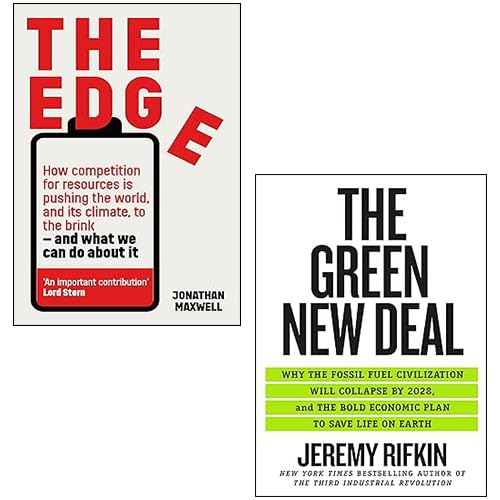
The Edge
The Green New Deal
Format: Hardback
Overview:
Two timely non-fiction works come together in this hardback 2-book collection that probes the forces shaping our economy, climate, and civic life. The Edge, by Jonathan Maxwell, invites readers to examine how profit-first systems influence policy, poverty, and the environment, calling attention to structural injustices that deepen inequality. The Green New Deal, by Jeremy Rifkin, offers a bold vision for transforming energy, infrastructure, and governance to confront the climate crisis with practical strategies that balance economic growth with sustainability. Together, these titles give a rigorous, accessible gateway to debates about sustainability, economic reform, and social change. Designed for students, policy enthusiasts, librarians, and curious readers alike, the set suits study groups, home libraries, and personal exploration. The hardback format ensures durability for repeated reading and reference in classrooms or living rooms. This 2-book collection provides a clear, authoritative starting point for understanding how economic systems intersect with environmental outcomes and the societies we build.
What This Collection Covers:
The collection surveys two complementary angles on the same precipice: economic structure and ecological responsibility. The Edge interrogates how markets, profit motives, and policy choices can entrench inequality while shaping climate outcomes, urging readers to question conventional wisdom about growth and control. It examines power, labor, and justice, drawing connections between poverty, policing, and legal frameworks in ways that illuminate today’s debates about fairer economies. The Green New Deal broadens the lens to policy and practical action, outlining a multi-faceted program to modernize energy systems, transport, and social protections in tandem. It situates climate action within the broader project of democratic renewal, showing how civic engagement, legislative innovation, and community organizing can move the country toward sustainable prosperity. Collectively, the set invites readers to map cause and effect—from personal choices to national policy—and to consider how responsible stewardship can coexist with economic opportunity. The result is not only a set of arguments but a toolkit for thinking critically about future pathways.
The Edge
Jonathan Maxwell’s The Edge surveys how economic systems can drive what many readers experience as climate crisis and social inequity. Maxwell wrestles with questions about profit, policy, and power, offering a careful critique of how contemporary capitalism intersects with environmental degradation and systemic injustice. The book blends accessible analysis with sharper questions about accountability, governance, and the role of communities in demanding change. The book ties with practical avenues for reform— from labor rights to policy levers that prioritize people and planet. With clear reasoning and compelling examples, The Edge invites debate, study, and action, making it a strong companion for students, policy readers, and readers who want to understand the roots of current crises while exploring paths toward more equitable futures.
The Green New Deal
Jeremy Rifkin’s The Green New Deal offers a comprehensive blueprint for reimagining energy, infrastructure, and governance in the face of the climate emergency. Rifkin argues for sweeping reforms that align economic activity with ecological limits, presenting practical policy steps, from renewable energy deployment to job creation and social protections. The tone is hopeful yet rigorous, balancing macro-policy analysis with on-the-ground implications for workers, communities, and regional development. The book situates climate action within a broader project of democratic renewal, urging citizens to engage in informed debate and collective planning. While grounded in data and historical context, it also speaks to everyday readers seeking tangible pathways to a sustainable future. The Green New Deal stands as a thoughtful, influential contribution to contemporary policy discussions, useful for students, policymakers, and anyone exploring the intersection of climate resilience and economic reform.
Who This Set Is Perfect For:
This two-book collection is ideal for readers who want to understand how economic choices shape the climate and social justice. It works particularly well in university courses, public policy reading lists, and library programs, especially for students studying economics, political science, environmental studies, or sociology. It also makes a thoughtful gift for politically engaged readers, activists, teachers, and book clubs seeking non-fiction with timely relevance and rigorous analysis. If you’re exploring how activism intersects with policy or looking for a solid foundation in climate economics, this set offers accessible, evidence-based perspectives that invite discussion and critical thinking. While framed for adult readers, the topics resonate with informed older teens interested in current affairs and the future of democracy and sustainable development.
Key Benefits:
- Two essential non-fiction titles on climate, economy, and society
- Clear, accessible analysis suitable for study groups and classrooms
- Perfect for gift sets for readers interested in sustainability and policy
- Durable hardback format for frequent reference and discussion
- Helps readers connect personal choices with systemic change
- Supports coursework in economics, political science, and environmental studies
About the Author:
Jonathan Maxwell is presented here as the author of The Edge, offering a rigorous critique of profit-driven economic systems and their social implications. Jeremy Rifkin is a renowned American economist and social theorist whose work spans energy transitions, technology, and sustainable development. In The Green New Deal, Rifkin builds on decades of research to examine how policy, industry, and civic action can align with ecological limits while promoting inclusive growth. Together, these authors offer complementary viewpoints that illuminate paths toward resilience, justice, and collective progress. Readers will encounter grounded data, thoughtful historical context, and practical insights that deepen understanding of how economies shape climate outcomes and social futures.
Why You’ll Love This Set:
Whether you are building a classroom collection, expanding a non-fiction shelf, or searching for a thoughtful gift set, this two-book collection delivers. The Edge offers a challenging critique that sharpens critical thinking, while The Green New Deal provides actionable policy framing and hopeful vision. The combination makes it easier to compare arguments, trace cause and effect, and discuss how to translate ideas into real-world change. The hardback editions ensure long-term use in libraries and study spaces, while the accessible prose invites readers across backgrounds to engage with complex topics. It’s an ideal starting point for conversations about sustainability, equity, and the future of democratic governance.
Please Note: The individual books included in this listing will be dispatched as per the original UK ISBN and UK edition cover image shown in the image.
- Choosing a selection results in a full page refresh.