

1
1
✔ In stock and ready to ship
🚚 Order within calculating... to receive it by
calculating...
✅ Fully tracked delivery on every order
📦 Tracking details sent instantly when your order ships
- Free US shipping on orders over $99 · $3.99 under $99
- Dispatched in 1–2 business days · delivery in 3–7 business days from dispatch via USPS (US only)
- 14-day returns from the date of delivery
⭐⭐⭐⭐⭐ 4.8/5 rating from 7,500+ verified customers
🔒 Secure checkout with Visa, Mastercard, Amex, PayPal & Shop Pay
SKU:
PLD5186
Barcode:
9789123956760
Titles in This Set
Stone Age
The Iron Age
Egyptians
Ancient Greeks
Celts
Romans
The Maya
Vikings
Castles
Digging Up the Past
Reptiles
Tadpoles and Frogs
Rainforests
Trees
How Flowers Grow
Caterpillars and Butterflies
Spiders
Bugs
Bees & Wasps
Ants
Details
Condition: Brand New
Format: Hardback
Publisher: Usborne
Age Range: Ages 5-7 (Grades K-1)
Overview
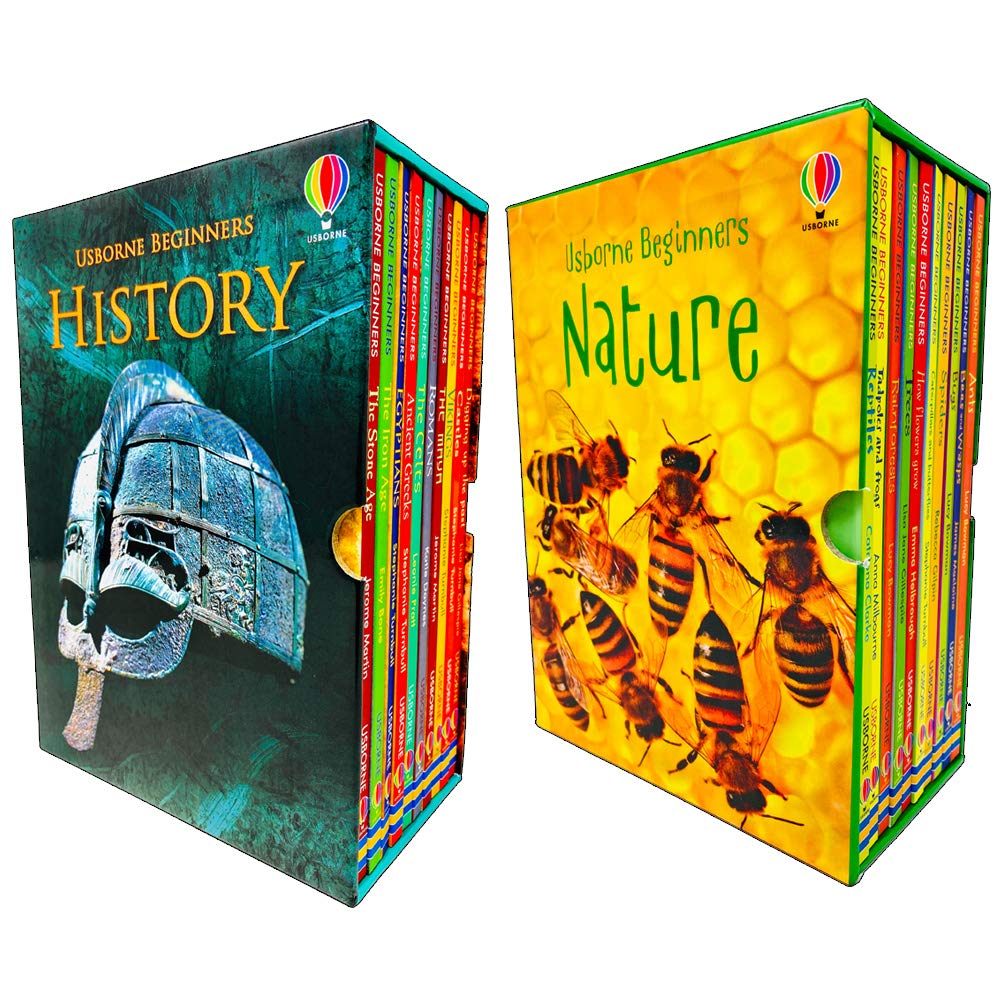
This Usborne Beginners History & Nature 20-book hardback box set pairs two complete ten-title series into one gift-ready collection for young readers ages 5-7. Ten History titles carry children from the Stone Age through the Iron Age, ancient Egypt, Greece, the Celts, Rome, the Maya, and the Vikings, ending with castles and archaeology. Ten Nature titles turn to reptiles, frogs, rainforests, trees, flowers, caterpillars, spiders, bugs, and bees and wasps and ants. Bright photographs, simple sentences, and clear glossaries make each hardback approachable for beginner readers building confidence at home or school.
About the Books
Usborne Beginners is a long-running non-fiction series written specifically for children ages 5-7 who are learning to read independently, and this 20-book hardback set brings together its History and Nature strands in full. The ten History titles move chronologically from prehistoric life in the Stone Age and Iron Age through Egyptians, Ancient Greeks, Celts, and Romans, before turning to the Maya, Vikings, castles, and the work of archaeologists in Digging Up the Past. Each book breaks a big historical era into short, clearly captioned spreads, so young readers can absorb dates, daily life, and famous landmarks without feeling overwhelmed by dense text. The ten Nature titles balance the set with a tour of the living world, covering reptiles, amphibian life cycles in Tadpoles and Frogs, rainforest habitats, trees, how flowers grow, caterpillars and butterflies, spiders, bugs, bees and wasps, and ants. Every title in both strands follows the same trusted Usborne Beginners format: vivid photographs and illustrations, short sentences pitched at a beginner reading level, and a glossary of new vocabulary at the back. Teachers, librarians, and parents often reach for this series because it bridges picture books and longer chapter books, giving children real informational content while still supporting decoding and comprehension skills. As a hardback set, it is sturdy enough for repeated library or classroom handling and durable enough to survive enthusiastic young readers, making it a dependable addition to any home bookshelf or early-years reading corner.
Key Benefits
- 20 complete hardback titles covering both History and Nature in one great-value box set
- Written specifically for beginner readers ages 5-7 learning to read independently
- Short, clearly captioned spreads with bright photographs and glossaries build vocabulary and confidence
- Sturdy hardback covers withstand repeated handling at home, in classrooms, or in school libraries
- Broad topic range, from the Stone Age to backyard bugs, supports curiosity across subjects
- A ready-made gift for birthdays, holidays, or starting a child's first non-fiction library
Book-by-Book Guide
Stone Age — Introduces how early people made tools, hunted, and formed the first communities, told through simple, image-led explanations.
The Iron Age — Covers farming, metalworking, and hill fort life, connecting new technology to everyday routines of the period.
Egyptians — Traces pyramids, mummies, and daily life along the Nile with clear, accessible vocabulary for beginner readers.
Ancient Greeks — Explores Greek myths, the first Olympic games, and everyday life in a straightforward, richly illustrated format.
Celts — Looks at hill fort communities, crafts, and warriors, showing how landscape shaped Celtic daily life.
Romans — Covers roads, villas, and emperors, helping readers picture daily life across the Roman Empire.
The Maya — Introduces Maya cities, calendars, and inventions, encouraging curiosity about a civilization built in the rainforest.
Vikings — Follows Viking longships, raids, and settlements, explaining how seafaring shaped their way of life.
Castles — Explains who lived in a castle and how these fortified homes were built and defended.
Digging Up the Past — Shows how archaeologists uncover and interpret clues from ancient sites and artifacts.
Reptiles — Surveys snakes, lizards, and turtles, highlighting how cold-blooded animals survive in different habitats.
Tadpoles and Frogs — Follows the frog life cycle from egg to tadpole to adult in clear step-by-step stages.
Rainforests — Introduces rainforest layers and the animals and plants that depend on this dense, humid habitat.
Trees — Explains how trees grow, change with the seasons, and support wildlife in a forest ecosystem.
How Flowers Grow — Walks through germination, pollination, and seed dispersal in simple, photo-supported steps.
Caterpillars and Butterflies — Follows the stages of metamorphosis from egg to caterpillar to butterfly.
Spiders — Looks at how spiders spin webs, hunt, and survive across a range of environments.
Bugs — Introduces a variety of insects and minibeasts, focusing on how they move, eat, and grow.
Bees & Wasps — Explains hive life, pollination, and the different roles bees and wasps play outdoors.
Ants — Explores ant colonies, teamwork, and the tunnels ants build underground.
About the Authors
This collection brings together several respected Usborne contributors, with Emily Bone among the lead writers credited across the series. Other contributing authors include Leonie Pratt, Jerome Martin, Stephanie Turnbull, Katie Daynes, Lisa Jane Gillespie, Catriona Clarke, Anna Milbourne, Lucy Bowman, Emma Helbrough, and Rebecca Gilpin. Each writer specializes in translating complex historical or scientific subjects into clear, age-appropriate language for beginner readers. Working alongside Usborne's in-house illustrators, they follow a shared house style that favors short sentences, labeled photographs, and glossaries, ensuring a consistent reading experience no matter which title a child picks up first.
Why You'll Love This Collection
Twenty hardback titles, two subjects, one great-value box: this set makes a ready-made classroom library, a thoughtful birthday gift, or a screen-time swap for school-break reading. Sturdy covers and short, colorful spreads keep beginner readers ages 5-7 engaged from Stone Age history to backyard bugs, perfect for holiday stockings or a first non-fiction library.
Please Note: This is the UK edition with the ISBN as listed; the cover may vary slightly from the image shown.
- Choosing a selection results in a full page refresh.