

1
4


✔ In stock and ready to ship
🚚 Order within calculating... to receive it by
calculating...
✅ Fully tracked delivery on every order
📦 Tracking details sent instantly when your order ships
- Free US shipping on orders over $99 · $3.99 under $99
- Dispatched in 1–2 business days · delivery in 3–7 business days from dispatch via USPS (US only)
- 14-day returns from the date of delivery
⭐⭐⭐⭐⭐ 4.8/5 rating from 7,500+ verified customers
🔒 Secure checkout with Visa, Mastercard, Amex, PayPal & Shop Pay
SKU:
MAN-VRT-U2911-9789124350826
Barcode:
9789124350826
Titles in This Set:
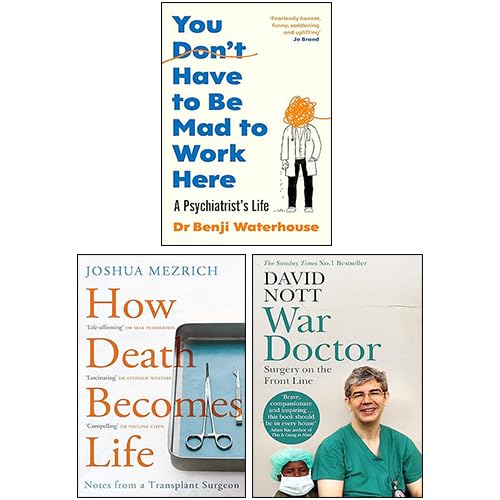
You Don't Have to Be Mad to Work Here [Hardcover]
War Doctor [Paperback]
How Death Becomes Life [Paperback]
Format: Mixed formats (Hardcover and Paperback)
ISBN: 9781787333178/9781509837052/9781786498892
Overview:
This Memoirs Collection brings three intimate, thought-provoking medical memoirs into one compelling set. From the corridors of a psychiatric hospital to the frontlines of war and the operating rooms where life is saved and reimagined, these titles offer diverse, firsthand perspectives on medicine, ethics, and human resilience. You Don’t Have to Be Mad to Work Here provides a candid look at psychiatry’s realities through the eyes of NHS psychiatrist Dr Benji Waterhouse, challenging assumptions about mental health care. War Doctor follows David Nott as he volunteers in war zones, performing life-saving procedures with limited resources and extreme danger. How Death Becomes Life by Joshua Mezrich delves into the history and humanity of organ transplantation, weaving patient stories with scientific breakthroughs. Together, the three books form a powerful non-fiction collection that invites reflection on the vocation of healing, the cost of courage, and the enduring hope found in medical practice. It’s ideal for readers who value real-life medical narratives and thoughtful storytelling. This set is suitable for adults and serious non-fiction enthusiasts seeking a multifaceted examination of medicine in practice.
What This Collection Covers:
Across these memoirs, readers explore medicine as a vocation under pressure. The first title uncovers the emotional and logistical complexities of psychiatry—where the human mind tests the boundaries of care and where staffing and resources shape patient outcomes. The War Doctor takes us beyond hospital walls into active conflict zones, revealing the personal risks physicians undertake and the improvisational skills that keep casualties alive when standard tools are scarce. How Death Becomes Life traces a century of transplant innovation, pairing historical milestones with intimate patient journeys to illuminate both scientific ingenuity and the ethical stakes of altering life and death. This collection speaks to healthcare professionals, students, and curious readers who want authentic, immersive narratives about healing, risk, and the evolving science of saving lives. The three memoirs together offer a panoramic view of medicine’s most gripping moments, encouraging readers to consider what it means to care for others in the most demanding of circumstances.
Book-by-Book Guide:
You Don't Have to Be Mad to Work Here — This gripping firsthand account pulls back the curtain on psychiatry, revealing the daily realities faced by clinicians in the NHS. Dr Benji Waterhouse describes the pressures of high caseloads, limited beds, and the moral dilemmas that arise when treatments are imperfect and outcomes are not guaranteed. The narrative blends clinical insight with human stories, highlighting how compassion, patience, and clear communication can influence recovery, even when the science remains imperfect. It is a candid invitation to understand why people choose psychiatry, and how practitioners balance scientific knowledge with empathy in the face of systemic constraints. Aimed at general readers and healthcare fans alike, the book invites reflection on what good mental-health care looks like in challenging environments.
War Doctor — David Nott’s extraordinary memoir chronicles decades spent in the world’s most dangerous conflict zones. From Sarajevo under siege to clandestine clinics in war-torn cities, Nott describes life-saving surgeries performed with improvised tools and scarce resources. The narrative conveys the fear, adrenaline, and resolve that accompany field medicine, as well as the moral complexity of operating under combat conditions. Readers witness how medical courage and technical skill intersect with humanity, sacrifice, and the limits of medicine when war ravages infrastructure. This is a testament to resilience, the patchwork nature of humanitarian care, and the relentless pursuit of saving lives in impossible circumstances.
How Death Becomes Life — Joshua Mezrich explores transplant surgery through the lens of history and patient experience. The book traces more than a century of breakthroughs, while threading in stories of donors, recipients, and surgeons who pushed the boundaries of possibility. Mezrich’s approachable storytelling demystifies complex science, making the ethical debates and emotional stakes accessible to a broad audience. Readers gain a deeper appreciation for the remarkable arc of organ transplantation—from early experiments to modern, life-saving techniques—and the human connections that give these scientific advances their meaning. A thoughtful, hopeful look at one of modern medicine’s most profound transformations.
Who This Set Is Perfect For:
This collection is ideal for adults who enjoy immersive medical memoirs, bioethics discussions, and historical perspectives on medicine. It suits readers seeking candid narratives about healthcare, war, and life-saving science, as well as students and professionals in medicine, psychology, nursing, and related fields. Gift buyers will appreciate a substantive, well-rounded set that offers three distinct voices and experiences, each expanding understanding of what it means to heal and to be human under pressure. Fans of real-life medical stories, memoir enthusiasts, and readers exploring the human dimensions of scientific progress will find this trio both enlightening and deeply moving. Classroom and book clubs focused on non-fiction, medical ethics, and history will also benefit from the varied angles these titles provide.
Key Benefits:
- Integrated collection of three acclaimed medical memoirs for cohesive browsing
- Real-world insights into psychiatry, war medicine, and transplant science
- Engaging, accessible non-fiction suitable for general readers and students
- Supports discussions on ethics, patient care, and the history of medicine
- Great gift set for healthcare professionals, educators, and memoir lovers
- Combines different formats to offer flexible reading experiences
About the Author:
This set features three distinct authors, each renowned in their own right for sharing medicine with honesty and humanity. Dr Benji Waterhouse writes from the perspective of an NHS psychiatrist, offering intimate clinical observations and an empathetic view of mental health care. David Nott presents a surgeon’s-eye view of conflict zones, detailing the improvisational craft of trauma surgery in austere environments. Joshua Mezrich, a transplant surgeon, blends medical history with patient-centered storytelling to illuminate the transformative power—and the ethical questions—behind organ transplantation. Together, these writers illuminate medicine’s most demanding moments with clarity, courage, and compassion, inviting readers to reflect on what it means to treat or be treated in extraordinary circumstances.
Why You’ll Love This Set:
If you cherish powerful real-life narratives about medicine and humanity, this collection offers a rich, varied reading experience. The voices differ in focus—psychiatry, wartime surgery, and transplantation—yet all center on the same core themes: the vulnerability of life, the resilience of caregivers, and the relentless pursuit of healing. Owning the complete set means access to complementary perspectives that deepen understanding and spark meaningful conversations, whether for personal enjoyment, professional insight, or classroom discussion. It’s a thoughtful, enduring gift for readers who value authentic storytelling anchored in real-world medical practice.
Please Note: The individual books included in this listing will be dispatched as per the original UK ISBN and UK edition cover image shown in the image.
- Choosing a selection results in a full page refresh.