

1
4


✔ In stock and ready to ship
🚚 Order within calculating... to receive it by
calculating...
✅ Fully tracked delivery on every order
📦 Tracking details sent instantly when your order ships
- Free US shipping on orders over $99 · $3.99 under $99
- Dispatched in 1–2 business days · delivery in 3–7 business days from dispatch via USPS (US only)
- 14-day returns from the date of delivery
⭐⭐⭐⭐⭐ 4.8/5 rating from 7,500+ verified customers
🔒 Secure checkout with Visa, Mastercard, Amex, PayPal & Shop Pay
SKU:
VRT5368
Barcode:
9789123703661
Titles in This Set:
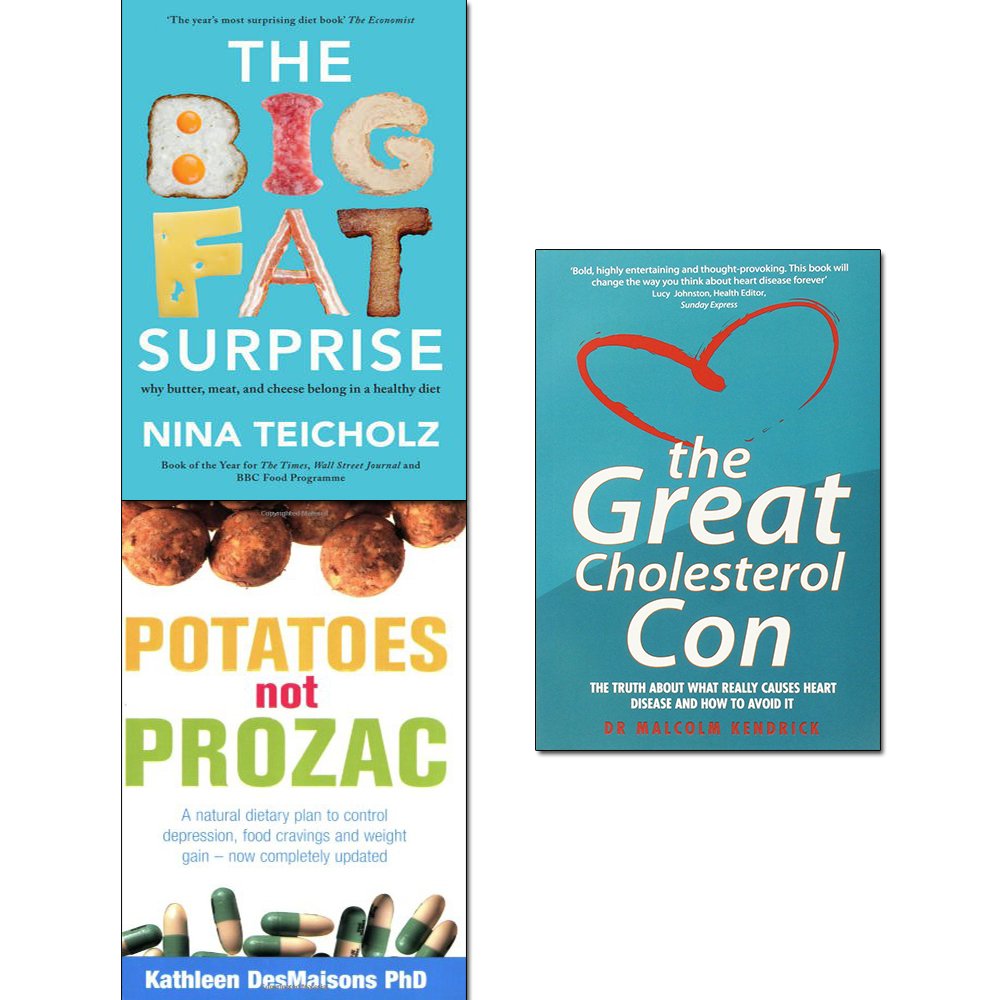
Potatoes Not Prozac
The Big Fat Surprise
The Great Cholesterol Con
Format: Paperback
Overview:
This three-book collection pulls back the curtain on some of the most persistent nutrition myths of our time. It brings together Potatoes Not Prozac, the accessible self-help perennial that connects sugar sensitivity with mood, energy, and cravings; The Big Fat Surprise, Nina Teicholz’s investigative deep-dive into decades of dietary guidance that demonized fat while challenging the science behind those guidelines; and The Great Cholesterol Con, a provocative critique of cholesterol-centric risk and the role of statins in modern medicine. Together, these titles form a cohesive, evidence-focused exploration of how nutrition science has shaped public policy and everyday eating. The set is written for adults who want to understand the science behind the headlines, question prevailing wisdom, and take informed control of their health. Its approachable tone makes complex research feel practical, not prescriptive, inviting readers to weigh new evidence against long-held beliefs.
What This Collection Covers:
Across these three books, readers encounter a common thread: the idea that long-standing dietary beliefs may have misled millions. Potatoes Not Prozac offers a science-based approach to overcoming sugar cravings by examining how brain chemistry interacts with food, mood, and behavior. The Big Fat Surprise argues that fat—correctly understood and consumed in moderation—can be part of a healthy diet, challenging the traditional low-fat paradigm that guided policy for decades. The Great Cholesterol Con interrogates the emphasis on cholesterol and statins, encouraging readers to examine the evidence for heart-disease prevention beyond a single biomarker. The progression from personal nutrition strategies to policy-level critique helps readers form a nuanced view of health guidance, empowering them to make dietary choices aligned with current research rather than outdated dogma.
Book-by-Book Guide:
Potatoes Not Prozac—This title presents a pragmatic, self-help framework for breaking sugar dependence by addressing “sugar sensitivity.” It blends practical meal planning with self-assessment tools designed to help readers identify triggers and rebalance daily routines. The author, Kathleen DesMaisons, emphasizes a protein-rich, complex-carbohydrate approach to stabilize mood and energy, supporting readers who struggle with cravings, weight fluctuations, and fatigue. The guidance is grounded in neuroscience-informed nutrition and aims to foster lasting lifestyle changes rather than quick fixes. Readers who want a clear, step-by-step plan to reduce compulsive eating will find this book both reassuring and actionable. The Big Fat Surprise—Nina Teicholz investigates why decades of nutrition policy discouraged fats and saturated animal products, and she presents a compelling case for re-evaluating dietary fat’s role in health. The narrative combines history, science, and interviews with researchers to illuminate how certain conclusions arose and why they persisted. The book is not anti-fat in a simplistic sense; it argues for a more nuanced understanding of fats, cholesterol, and their impact on obesity, diabetes, and heart health. Readers will gain a deeper awareness of how evidence is interpreted, how policy evolves, and how to assess conflicting scientific claims in their own lives. The Great Cholesterol Con—This title challenges the conventional narrative that links cholesterol alone to heart disease and questions the widespread reliance on statins. It scrutinizes the evidence behind cholesterol-centered prevention strategies and invites readers to consider alternative lifestyle factors that influence cardiovascular risk. The book’s provocative stance is designed to provoke thoughtful dialogue with healthcare providers and to encourage readers to seek a broader evidence base when making decisions about treatment and prevention. While perspectives may vary, the work contributes to a more thorough understanding of how medical guidelines are formed and how individuals can evaluate risk with a critical eye.
Who This Set Is Perfect For:
Ideal for adults who enjoy non-fiction that blends science, history, and practical health strategies. This collection suits readers curious about dietary guidelines, those who have felt overwhelmed by conflicting nutrition advice, and anyone seeking a more evidence-informed approach to fat, sugar, and cholesterol. It’s a thoughtful gift for health-conscious readers, book clubs exploring science-based wellness, and students studying nutrition, public health, or policy. If you’ve ever wondered why public guidance shifts over time or wanted clearer, more actionable explanations behind nutrition headlines, this set offers a coherent, accessible path through three distinctive voices and perspectives. The synergy across the three titles supports a well-rounded view of how diet affects mood, energy, heart health, and overall well-being.
Key Benefits:
- Clarifies sugar sensitivity and its impact on mood and cravings
- Reframes fat as a potential ally, not the sole dietary villain
- Encourages critical thinking about medical guidelines and policy
- Offers practical, science-informed steps for healthier eating
- Great for readers seeking evidence-based nutrition without dogma
- Suitable for book clubs, self-study, and thoughtful gifting
About the Author:
The set features three distinct voices. Kathleen DesMaisons, PhD, is renowned for identifying “sugar sensitivity” and developing a seven-step, protein- and complex-carbohydrate–focused program in Potatoes Not Prozac. Nina Teicholz is a journalist who investigates nutrition science and policy; her The Big Fat Surprise challenges decades of conventional wisdom about fat and heart health. The third title, The Great Cholesterol Con, presents a controversial critique of cholesterol-centric prevention and statin use, inviting readers to examine a broader evidencia base. Collectively, these authors bring accessible, research-grounded perspectives that empower readers to question assumptions, seek credible data, and engage thoughtfully with health information.
Why You’ll Love This Set:
If you’ve ever felt uncertain about where diet science is headed or wished for a clearer map through conflicting headlines, this collection delivers. You’ll appreciate the blend of personal-narrative clarity (sugar sensitivity), investigative rigor (fat guidelines), and policy critique (statin and cholesterol debates). Owning the complete set gives you a holistic view, from daily eating choices to the larger questions governments and institutions have wrestled with for decades. It’s an ideal addition to any health bookshelf, offering practical strategies, compelling case studies, and a thoughtful invitation to engage with nutrition science without surrendering your critical thinking.
Please Note: The individual books included in this listing will be dispatched as per the original UK ISBN and UK edition cover image shown in the image.
- Choosing a selection results in a full page refresh.